RaqamPro — financial ERP for businesses in Uzbekistan
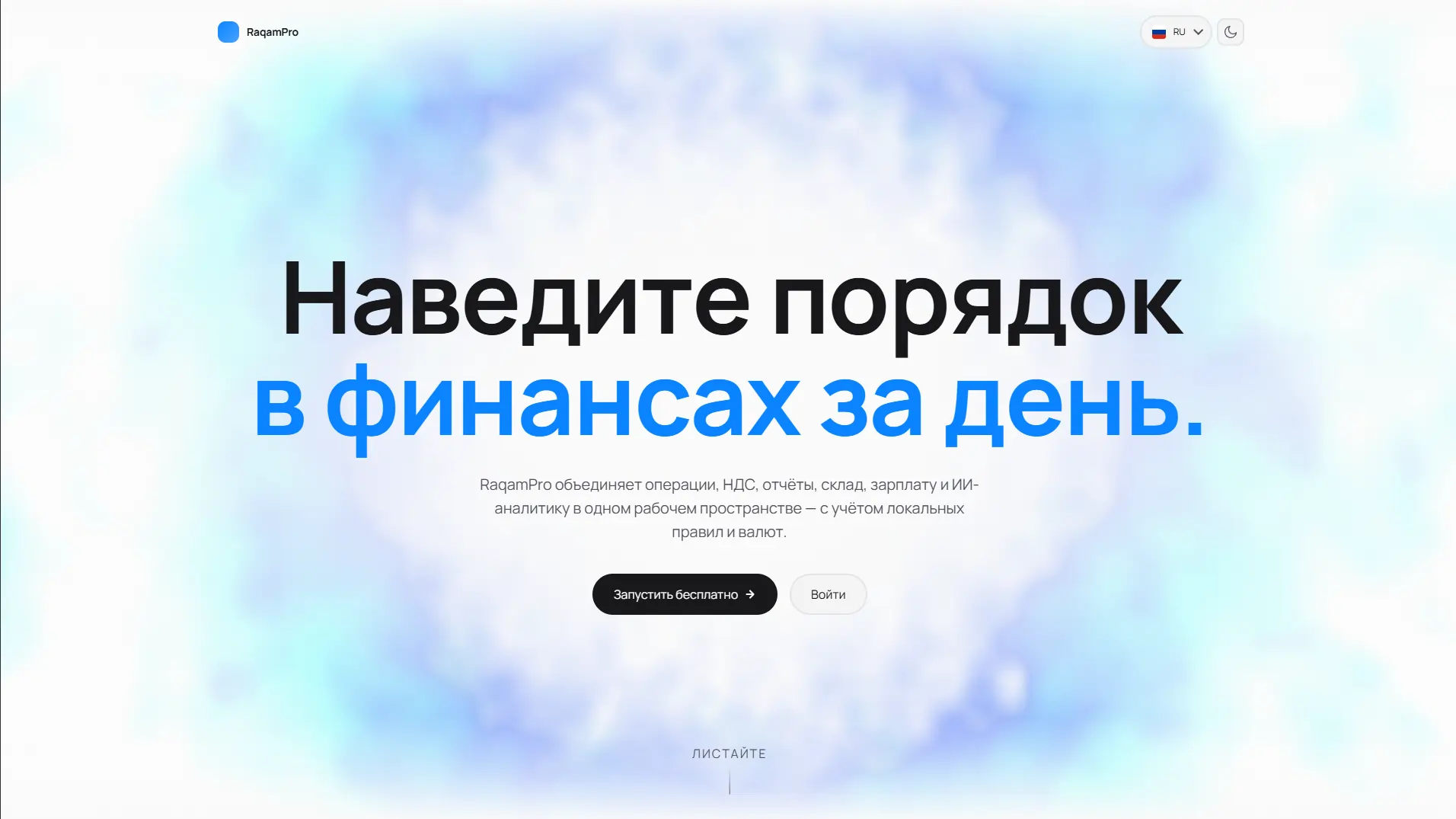
We developed RaqamPro, a financial ERP for businesses in Uzbekistan that brings transactions, reports, taxes, stock, payroll and an AI analyst into one workspace. Manual operations fell by 60%, and reports are now ready three times faster.
Challenge
RaqamPro is a SaaS platform for financial accounting and management built for small and medium-sized businesses in Uzbekistan. It replaces scattered Excel files, paper receipts and separate accounting tools, and it serves founders, managers and the employees who record the company's transactions every day.
Small and medium-sized businesses in Uzbekistan often run their finances on a patchwork of Excel files, paper receipts, a separate till program and whatever the accountant keeps. The owner sees profit and cash gaps only at the end of the month, when it is too late to change anything. RaqamPro needed a financial ERP system that pulls transactions, obligations and reports into one picture and shows it every day.
Off-the-shelf foreign systems fit local practice poorly. There are several VAT rates, settlements in soums, dollars, roubles and other currencies at the central bank rate, payroll taxes and pension contributions, and bank statements in different formats, including text exports from 1C. All of that had to live in the data model itself rather than in manual recalculations.
Several people work in the system at once: the owner, an accountant, a sales manager, a cashier. Each has their own tasks and their own access, and one entrepreneur may run several companies. Financial data must never mix between companies or stay open on someone else's device, so permissions and sessions were requirements from day one.
Finally, RaqamPro is a subscription product, not an internal tool. It needs a public website with pricing, sign-up in a few minutes, user documentation and an admin panel where the platform team manages companies, plans and payments, all in three languages and two colour themes.
Solution
We built the system around the flow of money. Employees record transactions, transfers and obligations, and the platform arranges them into a P&L, cash flow statement and balance sheet using the company's industry template: services, retail, wholesale or production. Deals, tasks, a plan-versus-actual budget and a payment calendar with a balance forecast work on top of the accounting.
For users, everything sits in one workspace. A global period filter drives every list and report, the display currency converts all totals, and the screen can be split into two panels. The owner invites staff with one-time codes and switches on the modules they need, while the AI analyst answers questions about the company's figures in plain language and points to the report lines behind each answer.
The front end runs on React and TypeScript, compiled by Vite, and its Sass design tokens drive the light and dark themes. The API is written in Go: the short-lived access token lives only in memory, the refresh token sits in an HttpOnly cookie, and an idle session ends after 30 minutes. The workspace, admin panel and documentation run on separate subdomains.
Reports by industry template
The P&L, cash flow statement and balance sheet follow the structure a company picks when it is created: services, retail, wholesale or production. The industry can be changed later and the reports rebuild themselves, while the Excel export of the P&L keeps a familiar layout with key totals highlighted.
Six currencies, central bank rates
Soums, dollars, euros, roubles, pounds and dirhams all work within one company. Rates are pulled from the Central Bank of Uzbekistan, transfers between accounts in different currencies convert automatically, and each user chooses the currency in which to see totals.
Statement import and auto-rules
Bank statements upload from XLSX, CSV and 1C text files. Auto-rules read the payment description and fill in the category, counterparty and direction, while bank reconciliation shows where the books drift away from the real balance.
Access control across 22 modules
Every employee gets their own set of permissions across 22 modules, from transactions and taxes to stock and AI. Access is checked twice: the interface hides closed sections, and the API refuses even when a link is opened directly. The owner brings new people in with one-time invite codes.
An AI analyst on live data
Questions such as how much went on rent last quarter can be asked in Russian, Uzbek or English. The answer streams in and cites the report lines it relies on, and the backend can connect Gemini, OpenAI or Anthropic without touching the interface or exposing keys in the browser.
Website, docs and admin panel
The public site presents the product, shows the Free, Pro and Business plans and leads to sign-up. The documentation explains every module, and the admin panel gives the platform team two roles: read-only access for support and full control over users, companies and plans.
Results
The project's key outcomes in numbers.
- −60%Manual operations
Statement import and auto-rules took most of the manual data entry off employees' plates.
- ×3Report preparation speed
Reports are assembled from transactions already in the system, so they are ready three times faster.
- 1 viewControl of every process
Finance, sales, stock, payroll and tasks come together in a single workspace.
- 30 daysTime to platform launch
It took 30 days to go from project kickoff to the platform launch.
Design & interfaces
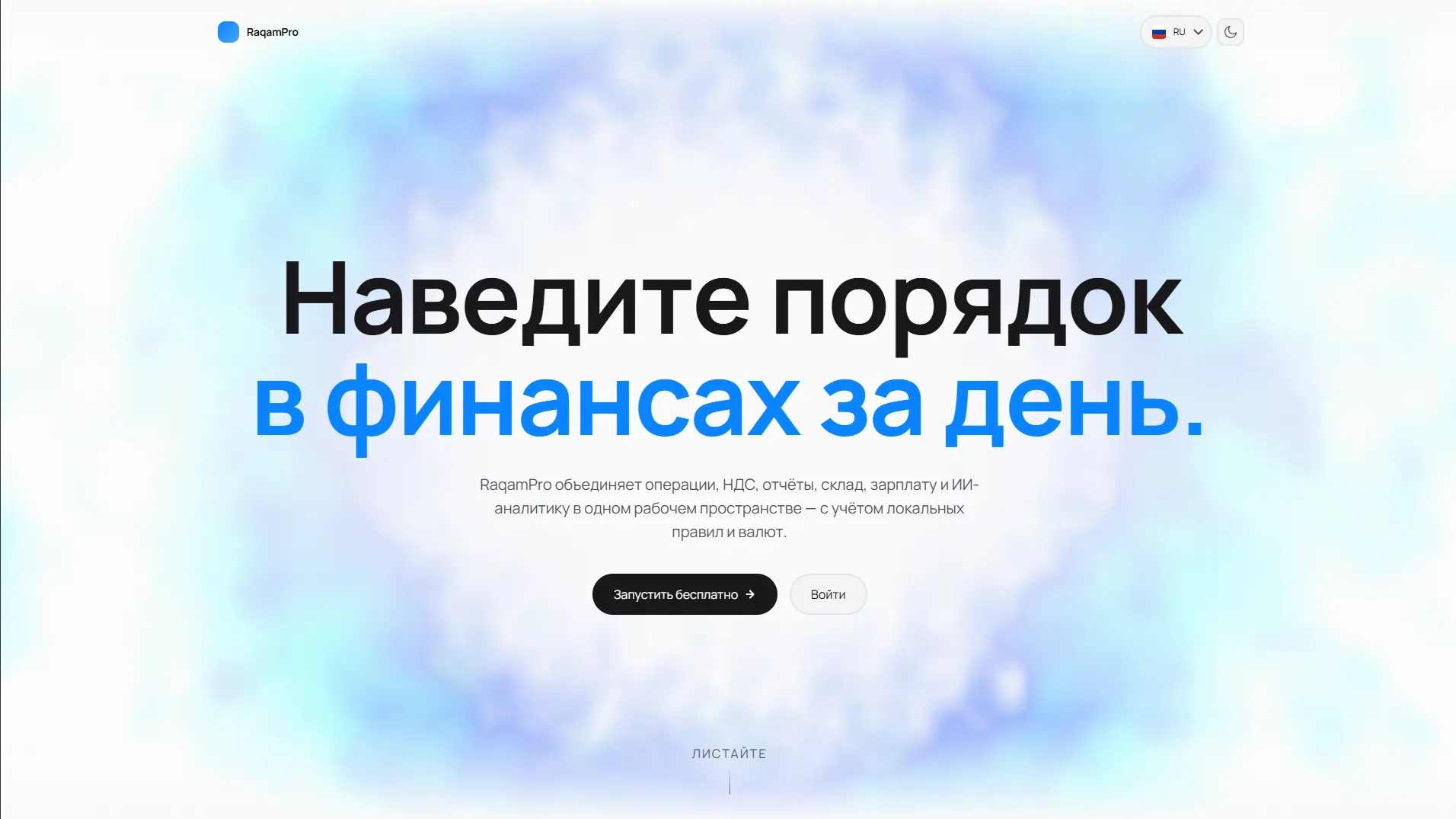
Key screens and interfaces of the project.
Project tech stack
The stack we used to build the solution for the client's task.
- Nginx
- TypeScript
- React
- Sass
- GSAP
- Vite
Similar cases

Ready to become the next case?
Tell us about your task — a manager will assemble the team, calculate the estimate and send a proposal within the first hour after the request. No obligations, no drip campaigns.