Foydada — tender app for Android and iOS
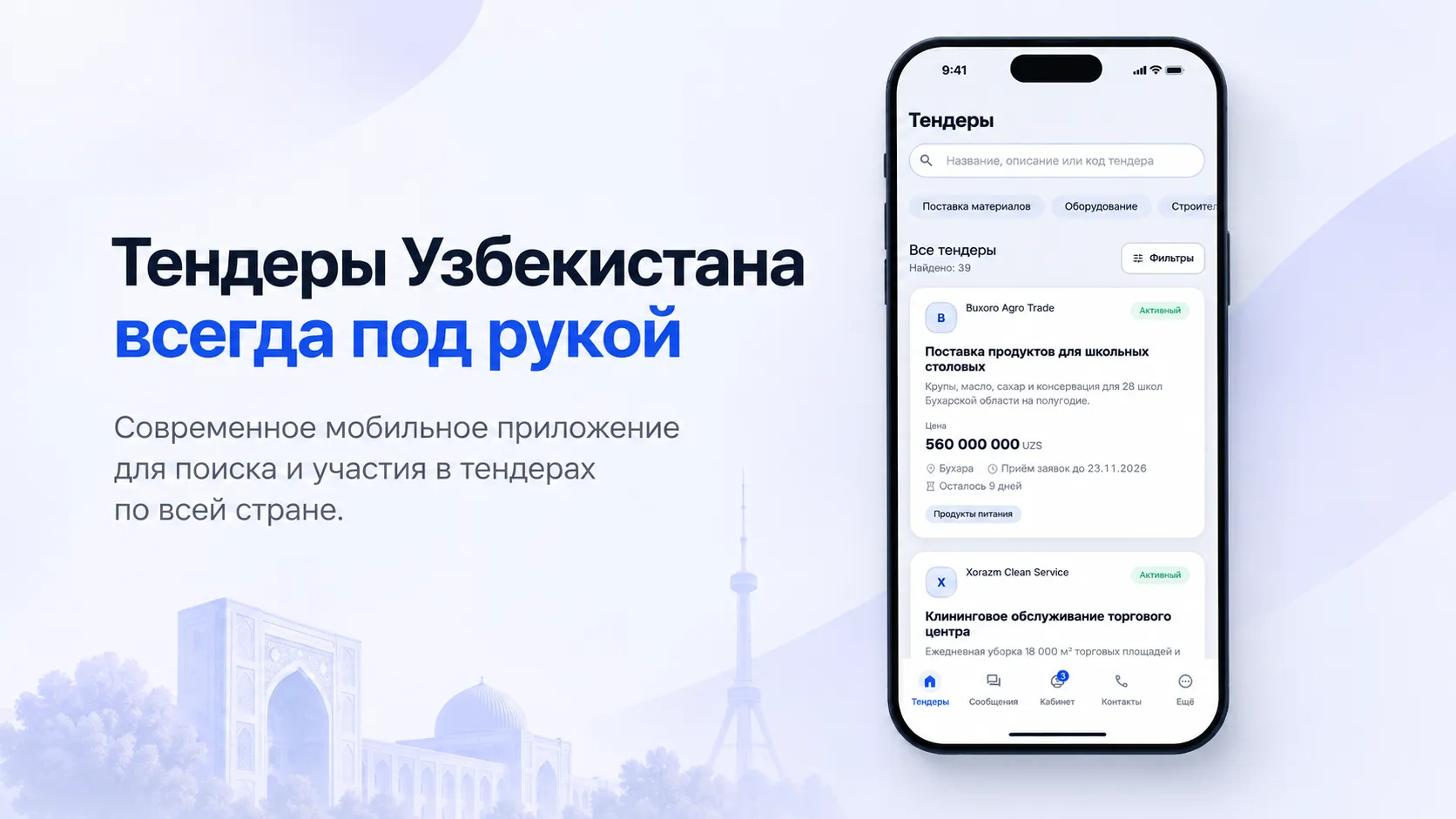
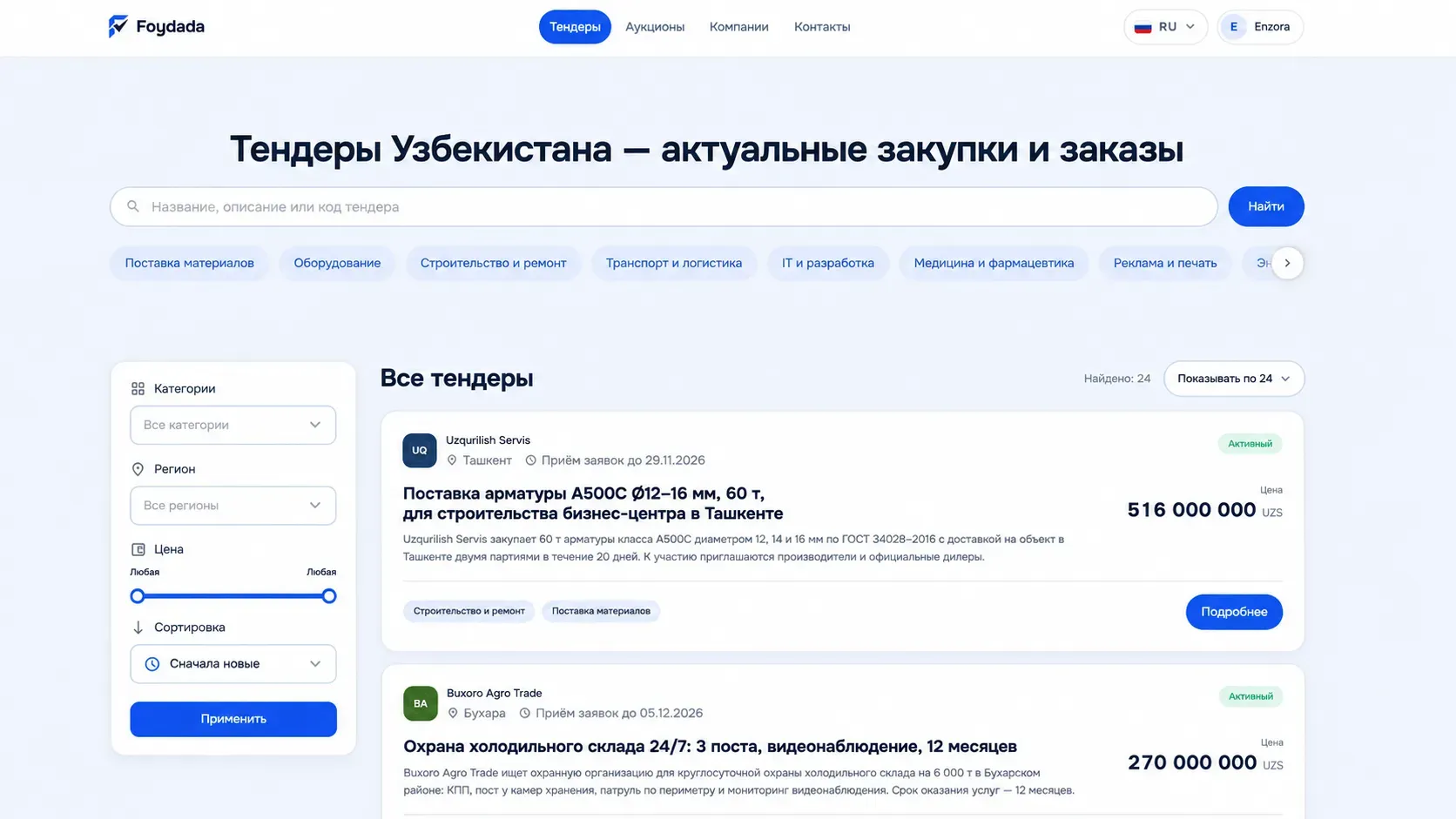
We built the Foydada tender app for Android and iOS: tenders, auctions, requests, chats and the dashboard work as on the website. It has 41 screens in three languages, uses the same account as foydada.com and is being prepared for the stores.
Challenge
Foydada is a tender marketplace in Uzbekistan where companies run tenders, auctions and requests and agree on terms in chat. Its users are buyers, contractors and suppliers from all over the country. The platform runs on foydada.com in Russian, English and Uzbek.
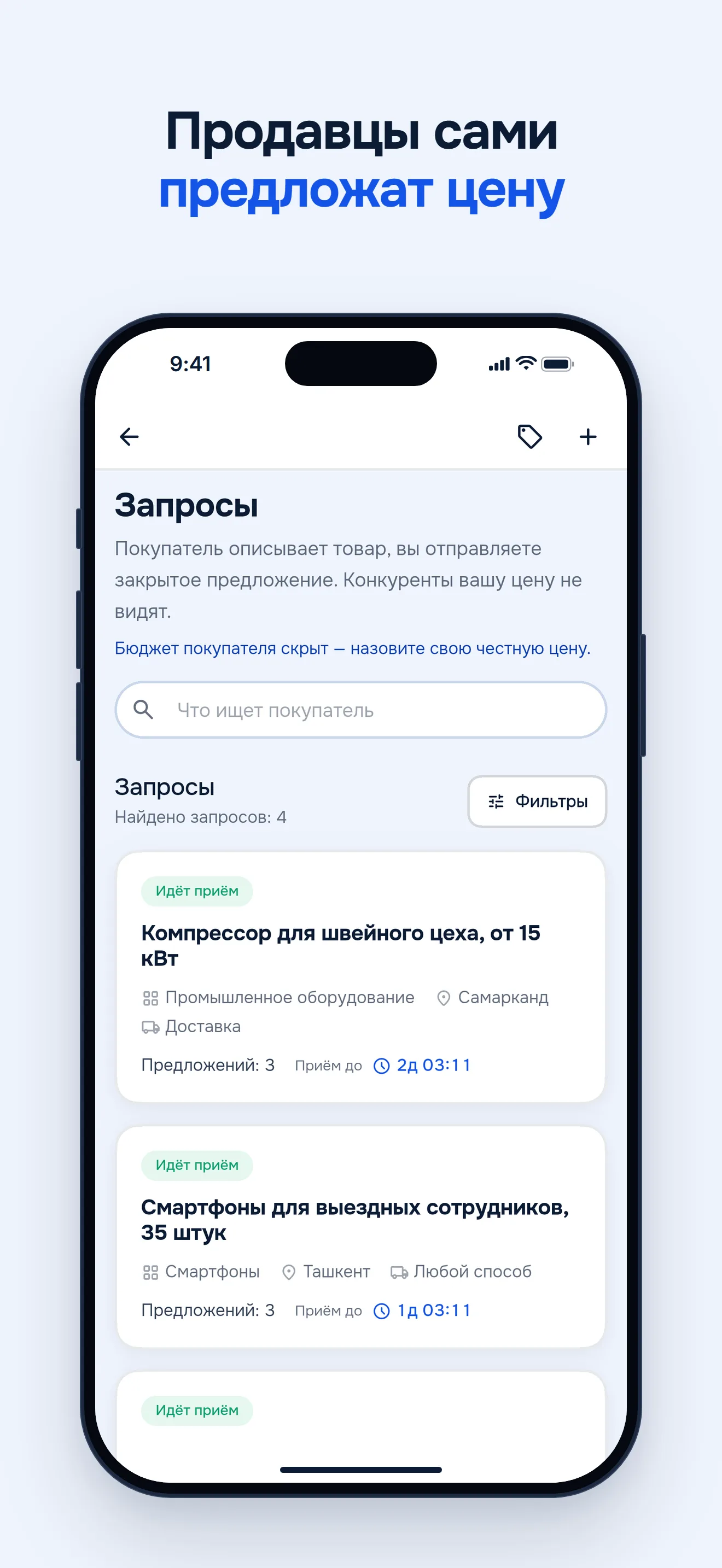
When work on the app began, the Foydada marketplace was already running on the website: tenders, auctions with live bidding, requests with a hidden budget, chat, notifications, a company dashboard and document verification. The client set a simple condition: the very first version of the tender app had to let a regular user do everything they can on the website, with no sections cut. People in an auction should not miss an outbid alert, a new offer or a message just because they are away from a computer. Staff work — dispute resolution and the admin panel — stayed on the website.
The app could not live a separate life. It had to use the same server and the same sign-in as the website, so the account, companies, bids and conversations are shared and a change made on the site shows up on the phone at once. Auctions and chat need real-time data and careful reconnection when the network drops. Money cannot be rounded, and auction deadlines have to be shown in Tashkent time. A link to a lot or a tender — from the website, a notification or a push — has to open exactly that screen in the app.
The tender app had to look like the website: the same colors, the Onest typeface, the icons and their animations, a light theme and portrait orientation. The stores add their own rules: account deletion inside the app, reports on other people's content, a declaration of collected data for the App Store and Google Play. Push notifications must ask for permission only from a signed-in user and must not repeat a chat the person is already reading. Lot photos are taken on the phone, so they have to be scaled down before upload. And all of it in Russian, English and Uzbek.
The app's users are the same buyers, contractors and suppliers as on the website. We defined success like this: a person signs in with the same account and sees their tenders, lots, requests and conversations; a bid, an offer or a chat reply goes out right from the phone; an outbid notification leads straight to the lot. On a poor connection the app must not hang on the splash screen. And if an old version stops fitting the server, the platform team must be able to ask everyone to update with a single setting, without a new website release.
Solution
We built the tender app to mirror the Foydada website for a regular user: the same account, the same data and the same trading rules.
The app is written in Flutter, one codebase for both Android and iOS. It signs in the way a browser does: sign-in data sits in the phone's secure storage, and every change is protected from forgery just as on the website. We extended the Django server side for the app: a sign-in lasts 90 days and renews with every action, Google sign-in is verified on the server, and the team sets the minimum app version in the admin panel. Bids, messages and unread counters arrive in real time, and after a dropped connection a screen catches up on its own. At launch the app waits no more than 3 seconds for the network; if the server is silent, it opens anyway and offers to retry.
The interface is built from a shared kit of elements with the same colors, shadows, spacing and Onest typeface as the website. Icons come from the same generator as on the website, which packs them into a 17 KB font, and each icon moves the way it does in the browser. Screens are named like the website's addresses, so a link, a notification and a push open the right screen by the same rules. An automated test makes sure every string exists in all three languages, and every change to the app passes more than 600 automated tests in GitHub Actions.
The same account as on the website
Users sign in with an email, password and emailed code, or with Google, and stay signed in for up to 90 days; sign-in data sits in the phone's secure storage. If the sign-in is lost while a form is being filled in, the app shows sign-in right there and keeps what was typed. An account can be deleted in settings with an emailed code, as the App Store and Google Play require. Signing out unlinks the phone from the account, so pushes stop arriving on it.
Bids and chat in real time
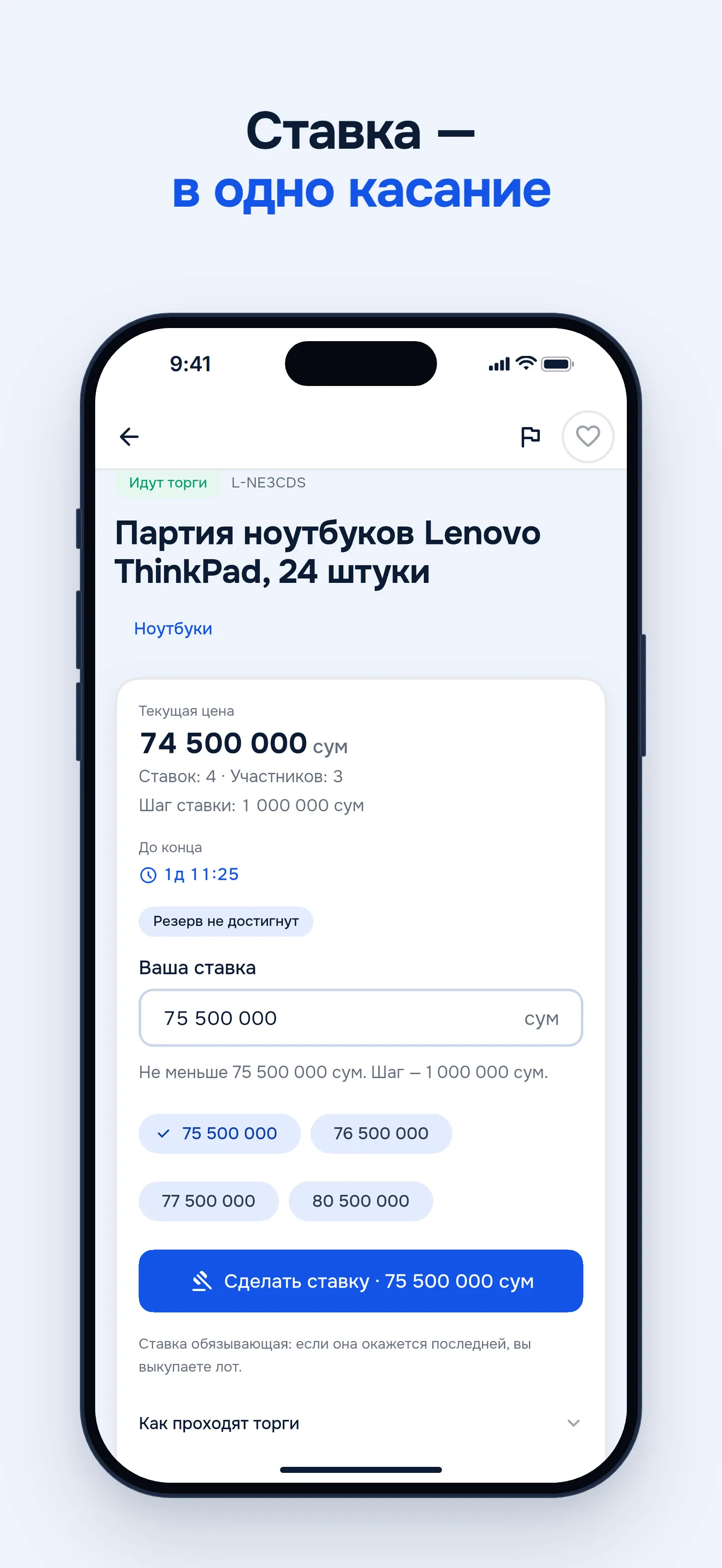
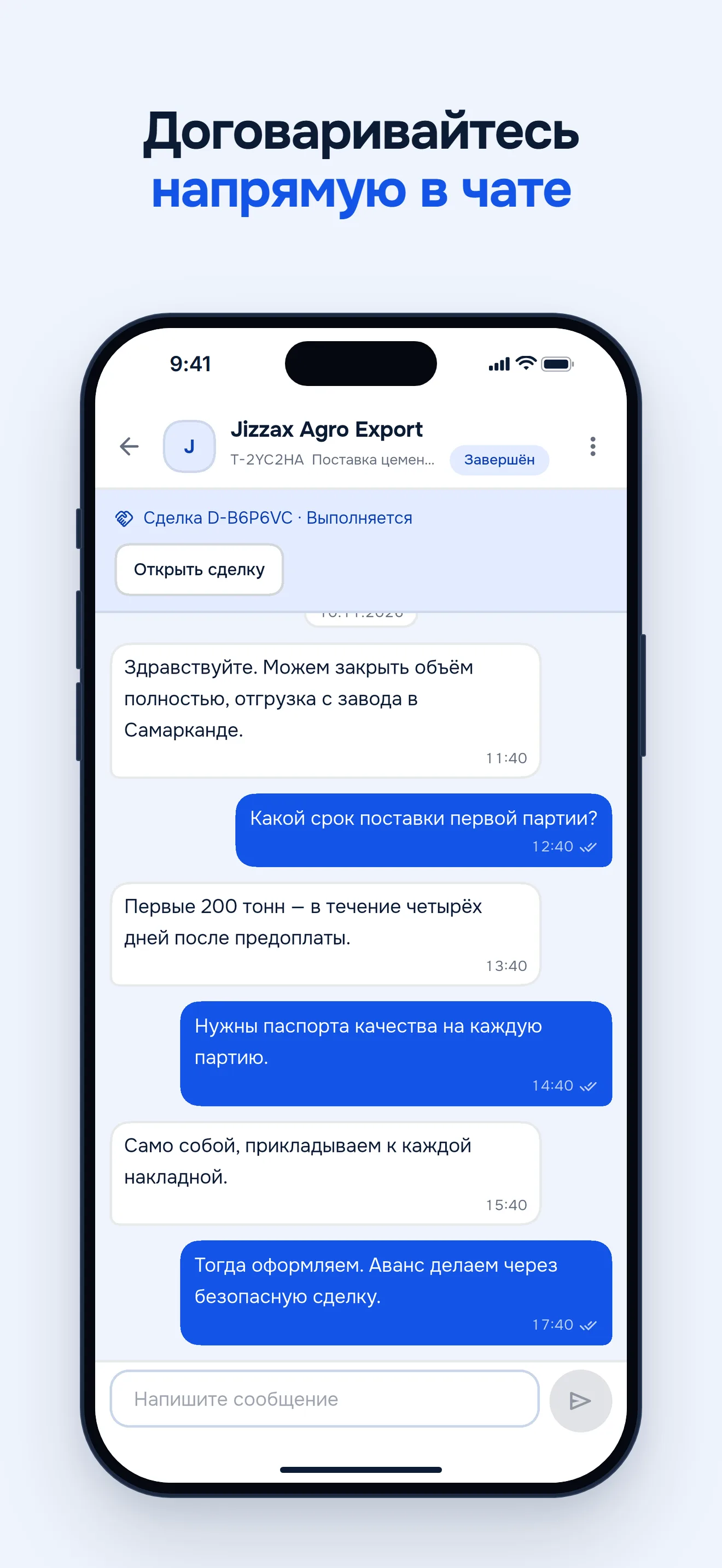
A lot page updates by itself: the new price, an auction extension and the bid history arrive at once, with no screen refresh. Bid amounts are offered as buttons, a bid is confirmed in a separate dialog, and if someone outbids the user meanwhile, the app shows the new minimum. In chat a message appears instantly without waiting for the server, read receipts and “typing…” are shown, and older messages load on scroll.
The company dashboard on a phone
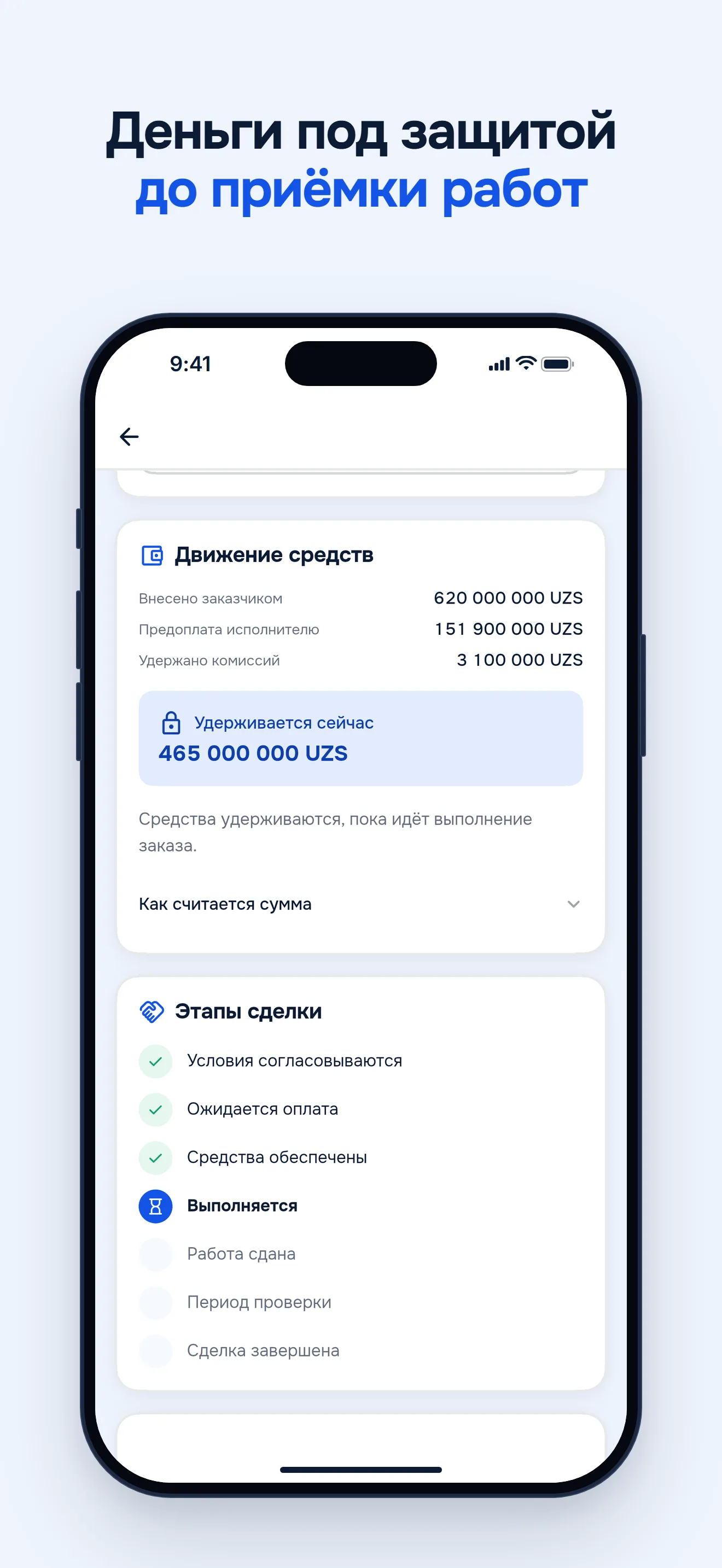
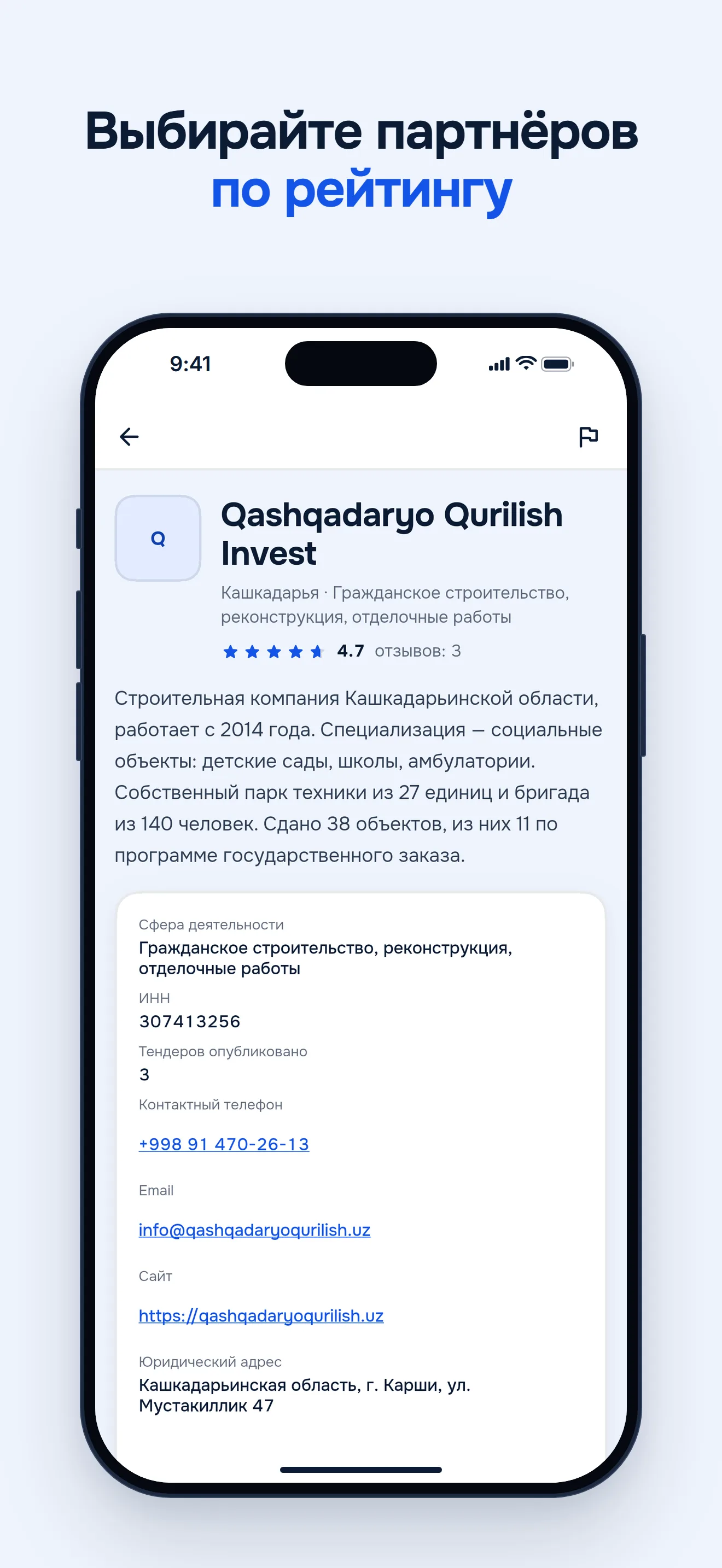
The dashboard holds the user's tenders, lots, requests, offers and bids. A tender is edited on three language tabs, lot photos come from the gallery or the camera and are scaled down to 2048 pixels, and verification documents are uploaded straight from the phone. The app draws the yearly activity charts itself, with no extra modules, and re-checks the Telegram link when the user comes back.
Links and pushes open the right screen
A website link, a notification and a push open the right screen by the same rules: the app's screens are named like foydada.com addresses. The website already serves the Android and iOS link files, so links to tenders, lots and companies can open in the app. Pushes are ready and switch on once a Firebase project is connected: permission is asked once, after sign-in, and inside an open app a push becomes a toast with an “Open” button.
A design that matches the website
Colors, shadows, spacing and the Onest typeface are carried over from the website one to one. Icons are the same as on the website, from the Material Symbols set, each with its own animation: the bell swings and arrows nudge in their direction. Screen changes and card heights move smoothly, and when the system asks for reduced motion, animations turn off. The theme is light only, in portrait.
Ready for the App Store and Google Play
The icon and the splash screen are generated from the website's logo, and a signed Android version for the store is ready. We added reports on tenders, lots, companies and chats and filled in the stores' data disclosure: the app has no ads, analytics, crash reporters or tracking. The team raises the minimum version in the admin panel, and older versions ask to update. Unneeded permissions to read the phone's media are removed from the Android version.
Results
The project's key outcomes in numbers.
- 41App screens
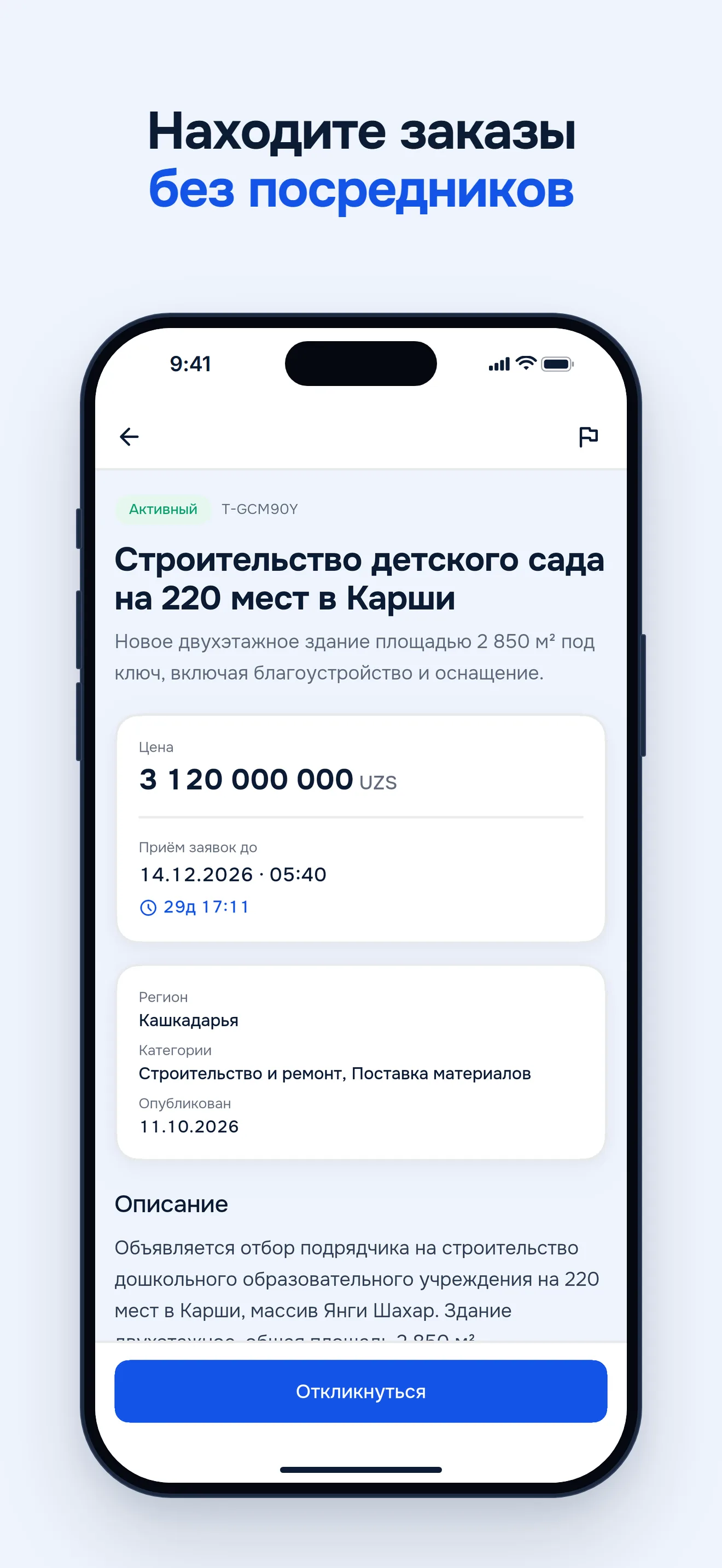
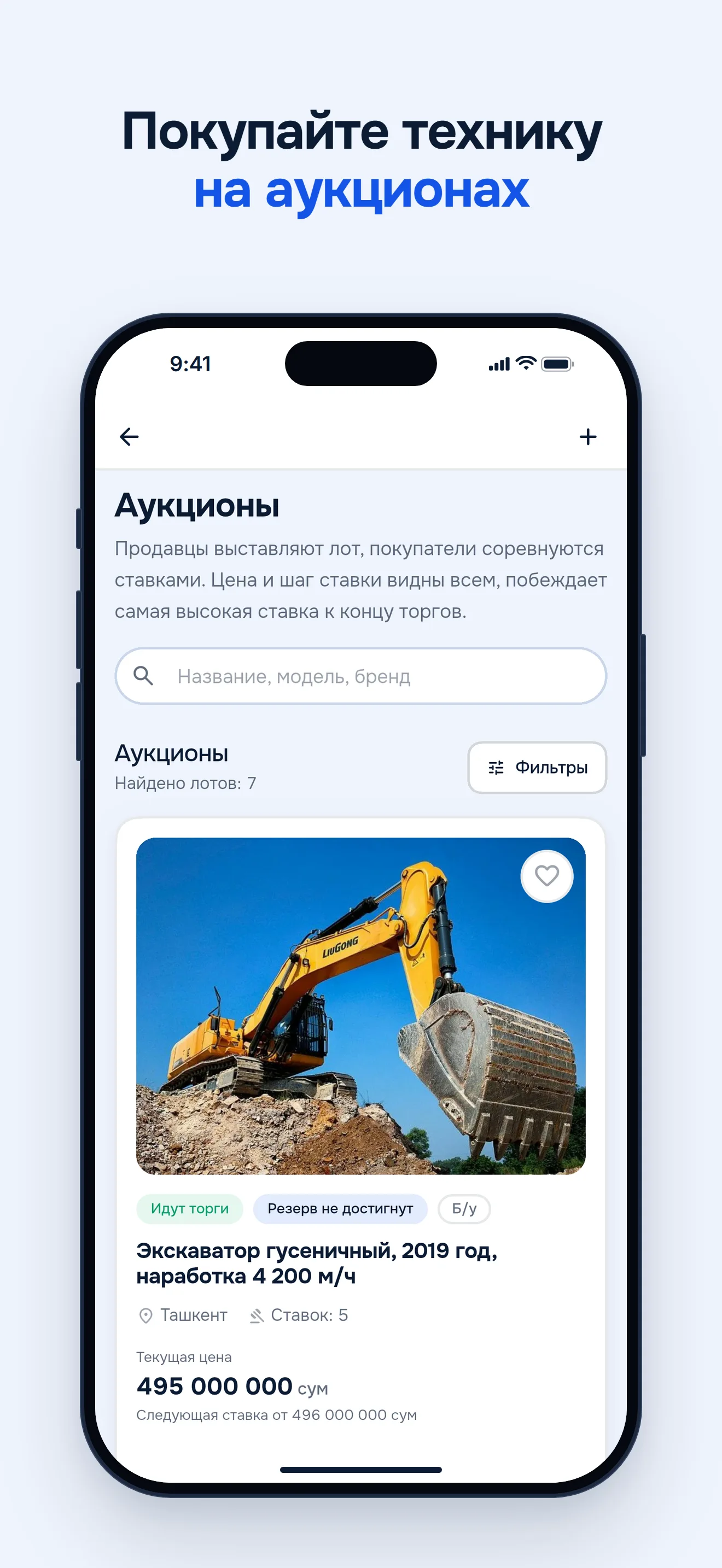
The 41 screens cover everything a regular user does on the website: tenders, auctions, requests, chats, notifications and the dashboard.
- 2Platforms: Android and iOS
One app for Android and iOS, with a signed Android version for the store already built.
- 3Interface languages
Russian, English and Uzbek: the app follows the phone's language until the person picks their own.
- 90 daysWithout signing in again
In the app a person stays signed in for 90 days, renewed with every action, while on the website it is 14 days.
Design & interfaces
Key screens and interfaces of the project.
Project tech stack
The stack we used to build the solution for the client's task.
- Python
- Django
- Django Ninja
- Django Channels
- GitHub Actions
- Dart
- Flutter
- Firebase Cloud Messaging
- Google Sign-In
Similar cases
Ready to become the next case?
Tell us about your task — a manager will assemble the team, calculate the estimate and send a proposal within the first hour after the request. No obligations, no drip campaigns.