Foydada — B2B tender marketplace in Uzbekistan
We built Foydada, a tender marketplace in Uzbekistan: tenders, auctions with live bidding and requests with a hidden budget under one account. The catalog covers 14 regions in three languages, and the parties negotiate in a real-time chat.
Challenge
Foydada is a tender marketplace in Uzbekistan with an office in Tashkent. Companies publish purchases and lots on it, while contractors and suppliers from every region respond, compete and agree on terms directly. Its users are companies that need to buy works, services or goods, and those ready to do the job or supply them.
Foydada was conceived as an open procurement platform without middlemen. A buyer publishes a tender for free with a budget, a deadline, a region and documents, and contractors find it in the catalog and write to the buyer in a chat. Tenders alone were not enough for the client, though. Ready-made goods needed auctions where buyers move the price themselves, and quick requests where sellers send offers without seeing the budget. All three modes had to live in one tender marketplace: one account, one dashboard, a shared chat and notifications, plus a public page with a rating and reviews for every company.
Every mode involves money and obligations, so the trading rules must hold without exceptions. Two bids placed in the same second cannot both become the leading one. A request's budget must not reach a seller in any way, not even in the hidden data of a page. A bid in the final seconds must not take away everyone else's chance to answer. Phones and links in lot descriptions and in the related chats have to be hidden automatically, and repeat offenders restricted without manual work by moderators. Auctions and offer windows must close on time by themselves. At the same time the bid history must stay open and every deadline clear to every participant.
Content on the tender marketplace is created by users and changes all the time. A published tender has to reach the catalog and search engines on its own, with no manual site update, and a tender past its deadline has to leave the catalog on its own. Search engines must see every page ready-made in three languages and know which language version to show to whom, and frequent requests must not hit the database every time. Security is a topic of its own: sign-in, uploads of documents and logos, protection against password guessing and form spam. Phone photos weigh megabytes, so logos and avatars must be compressed before they are sent. A tender's Russian text is required, while English and Uzbek are up to the author.
The audience is buyers, contractors and suppliers from all over the country. We defined success like this: a buyer publishes a tender without waiting for moderation; a contractor finds it by category, region and price and writes to the buyer right away; a seller lists a lot and buyers watch the price change in real time; a buyer receives sealed offers only from verified companies. Company owners need a yearly view of their activity, and moderators need a queue of reports. The tender marketplace team runs everything from the admin panel — from categories and bid steps to user reports — without a developer.
Solution
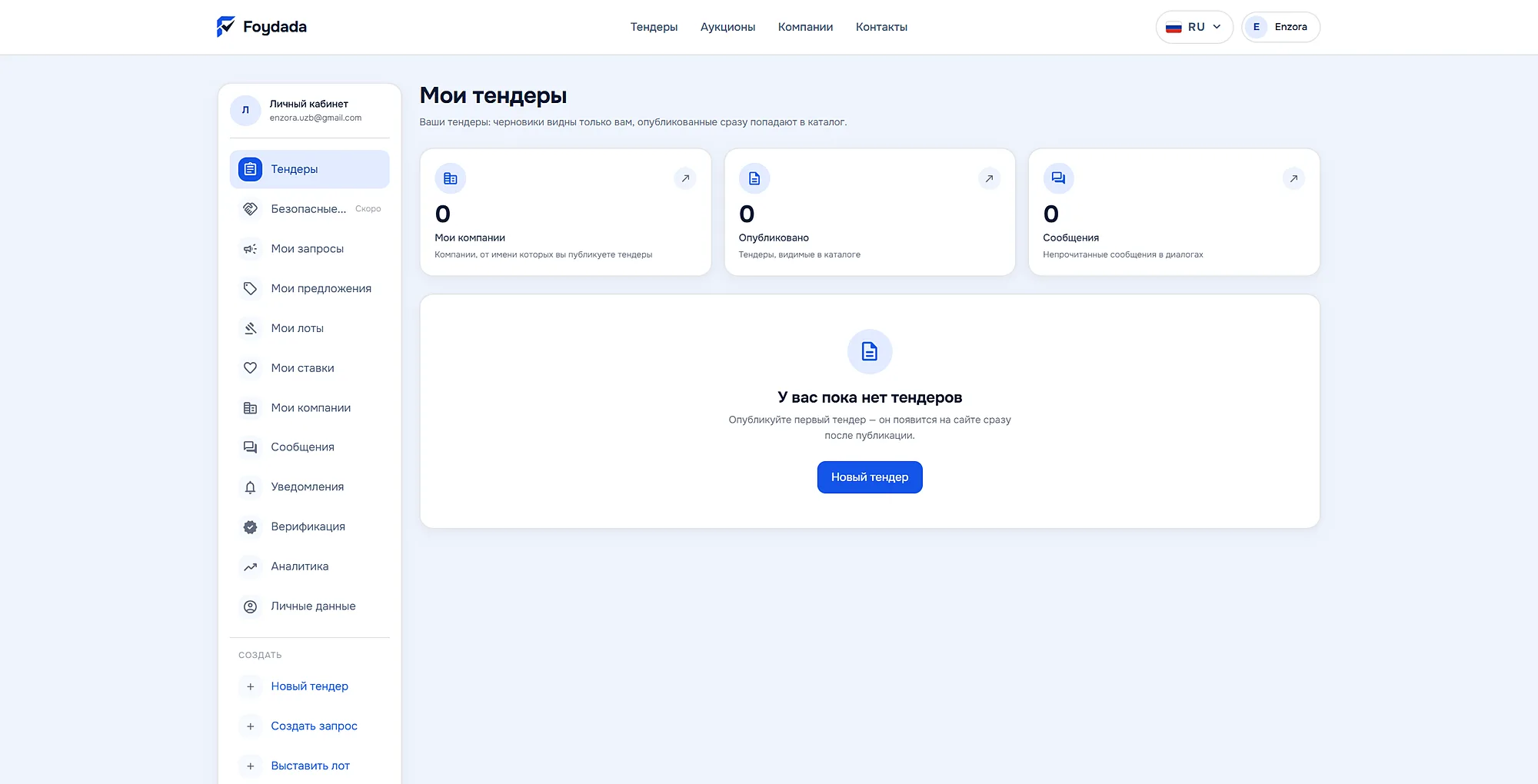
We brought tenders, auctions and requests together in one tender marketplace with a shared account, a company directory, real-time chat and notifications. It works in Russian, English and Uzbek, and bids and messages arrive without a page reload.
The site runs on Nuxt 3: every page reaches the browser ready-made, so people and search engines see it at once, and the markup tells search engines which language version to show. Ready pages are kept for 30 seconds to 5 minutes and refreshed in the background, so a new tender shows up in the catalog in about a minute and enters the sitemap by itself. The server side is written in Python and Django with a PostgreSQL database, which lines up simultaneous bids so that only one can lead. Redis keeps frequent answers in memory and drops them on every change, and Django Channels delivers bids, messages and notifications without a page reload.
We built the admin panel for the platform team on Django Unfold with 36 sections, from tenders, lots and requests to reports, violations and settings. Bid steps, the auction extension time and request limits are changed there, not in code. The safe deal is switched on there too: a deal flow with nine statuses and a money ledger whose entries can never be changed afterwards is built but currently turned off. More than 400 automated tests check the trading rules, from two simultaneous bids to the hidden budget. Timers on the server itself check every minute which auctions are due to close, the services run under a separate account with restricted rights, and code reaches the server automatically.
Tenders with chat and reviews
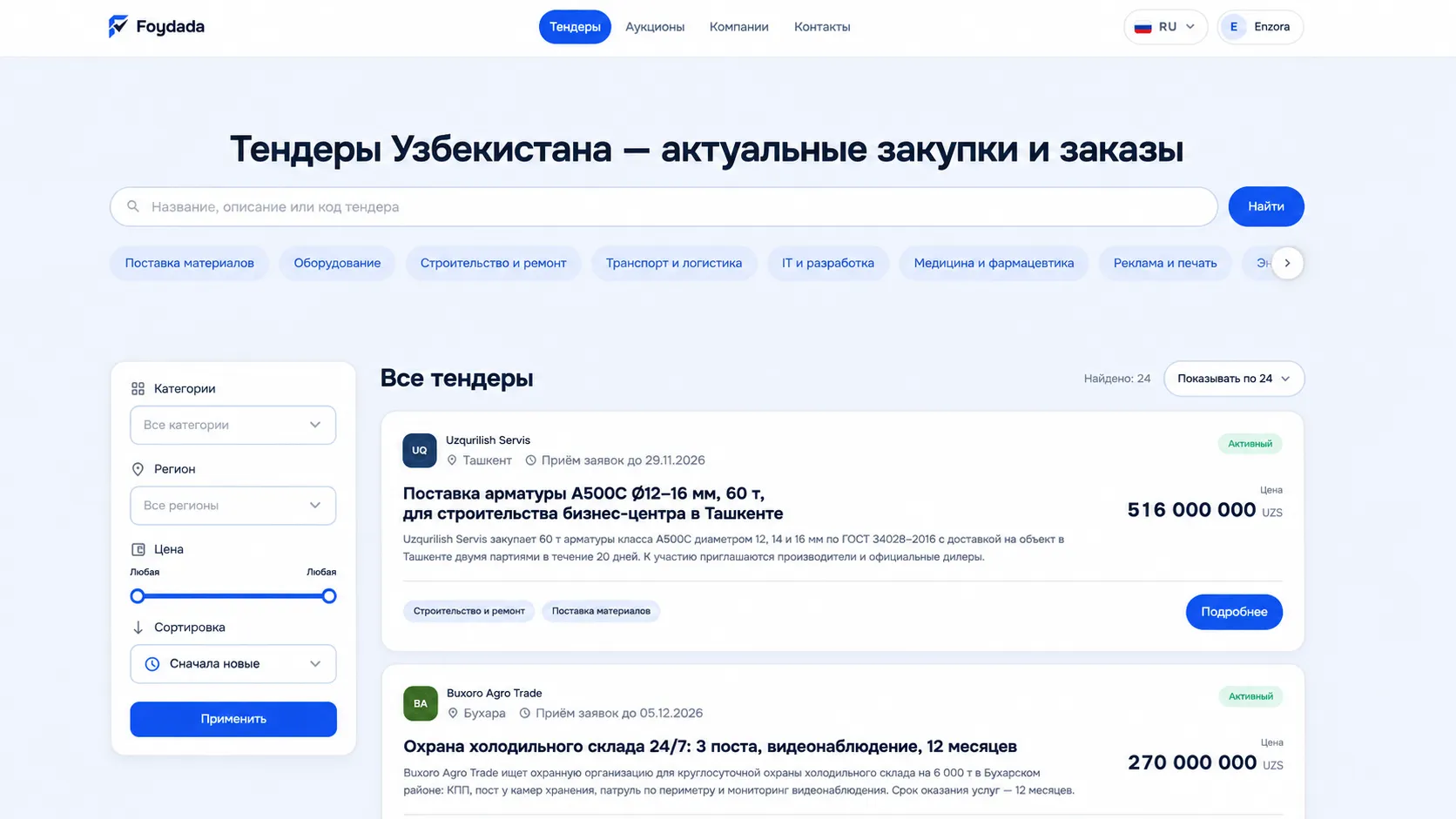
A buyer sets the category, region, budget and submission deadline and attaches up to four PDF, Word or Excel documents. A tender past its deadline leaves the catalog by itself and comes back if the deadline is extended. The “Respond” button opens a chat with the buyer, and a company review can be left only after both sides confirm the work is done. Responding needs only an account, not a company.
Auctions with a live price
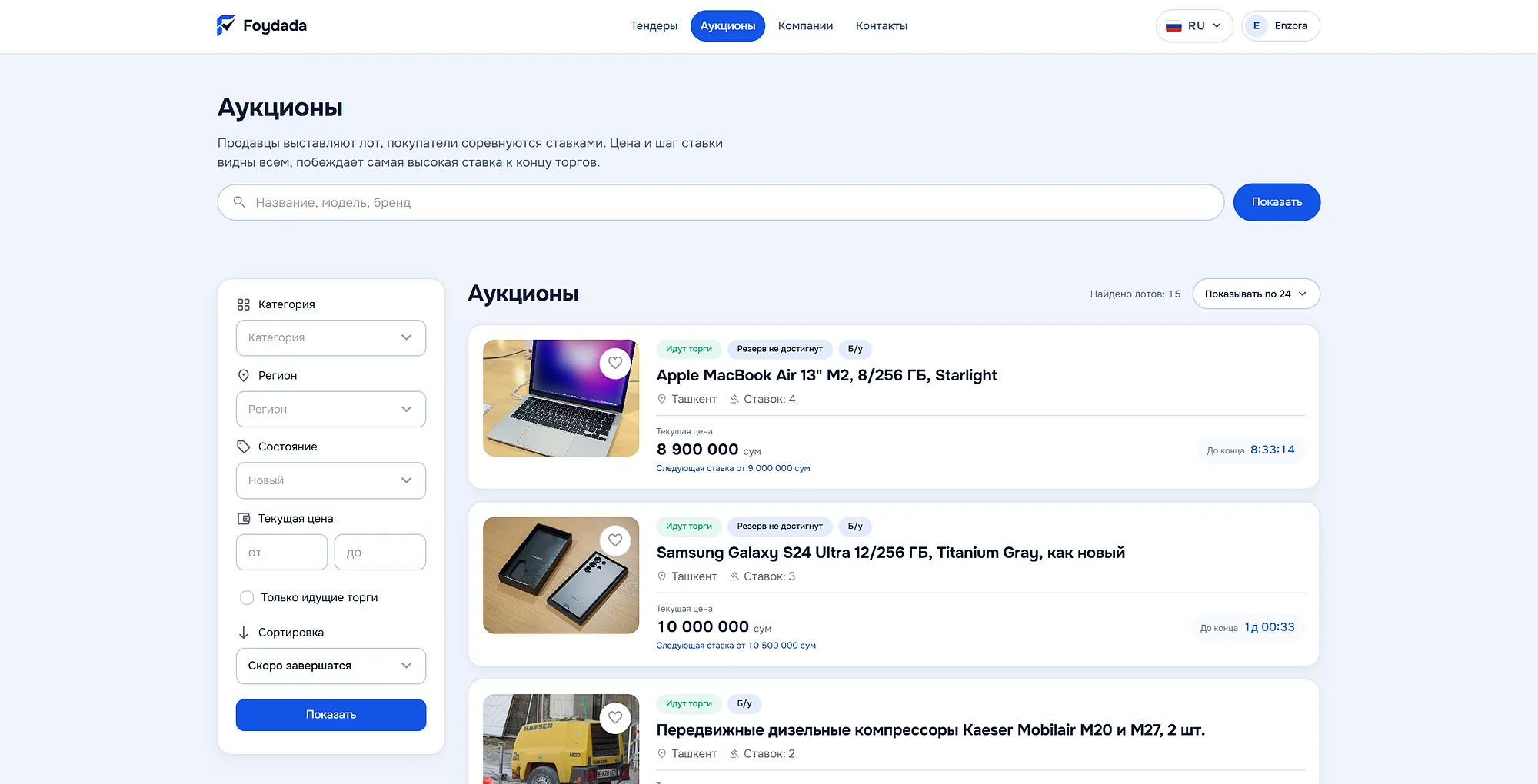
A seller sets a starting price and, optionally, a hidden reserve and a “Buy now” price that disappears after the first bid. Bids are binding and follow a step ladder, and a bid in the last 5 minutes extends the auction so others have time to respond. The new price and end time appear at once on every open lot page without a reload, and each lot has a public bid history and questions to the seller.
Requests with a hidden budget
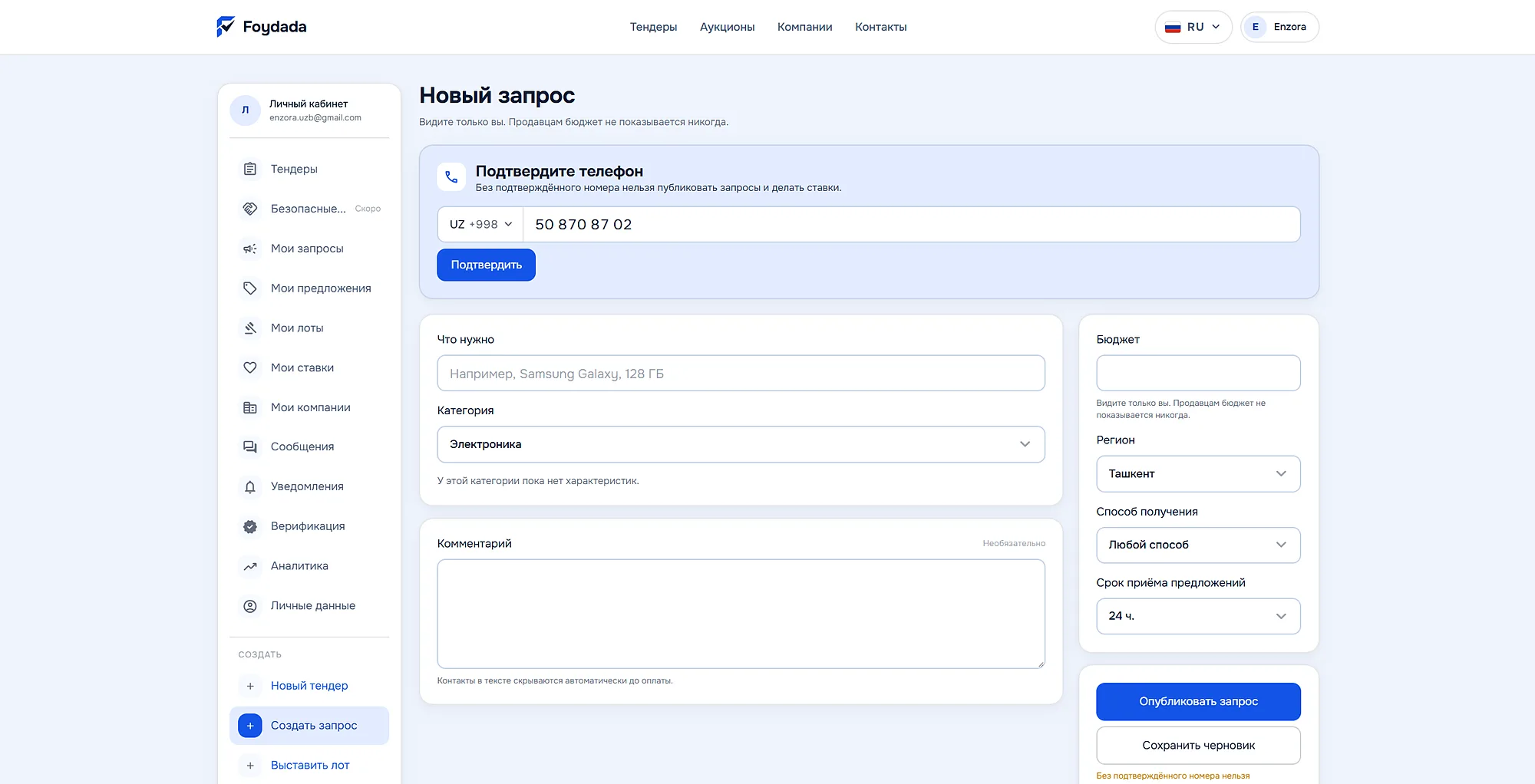
A buyer describes the goods using the category's fields and sets a budget that sellers never see: the site simply never sends it to them, and a dedicated automated test checks this. Offers are accepted for 6 to 72 hours and only from verified companies. Each one costs a response credit, which comes back if the buyer chooses nobody. The chosen seller confirms availability within 2 hours.
Company directory and verification
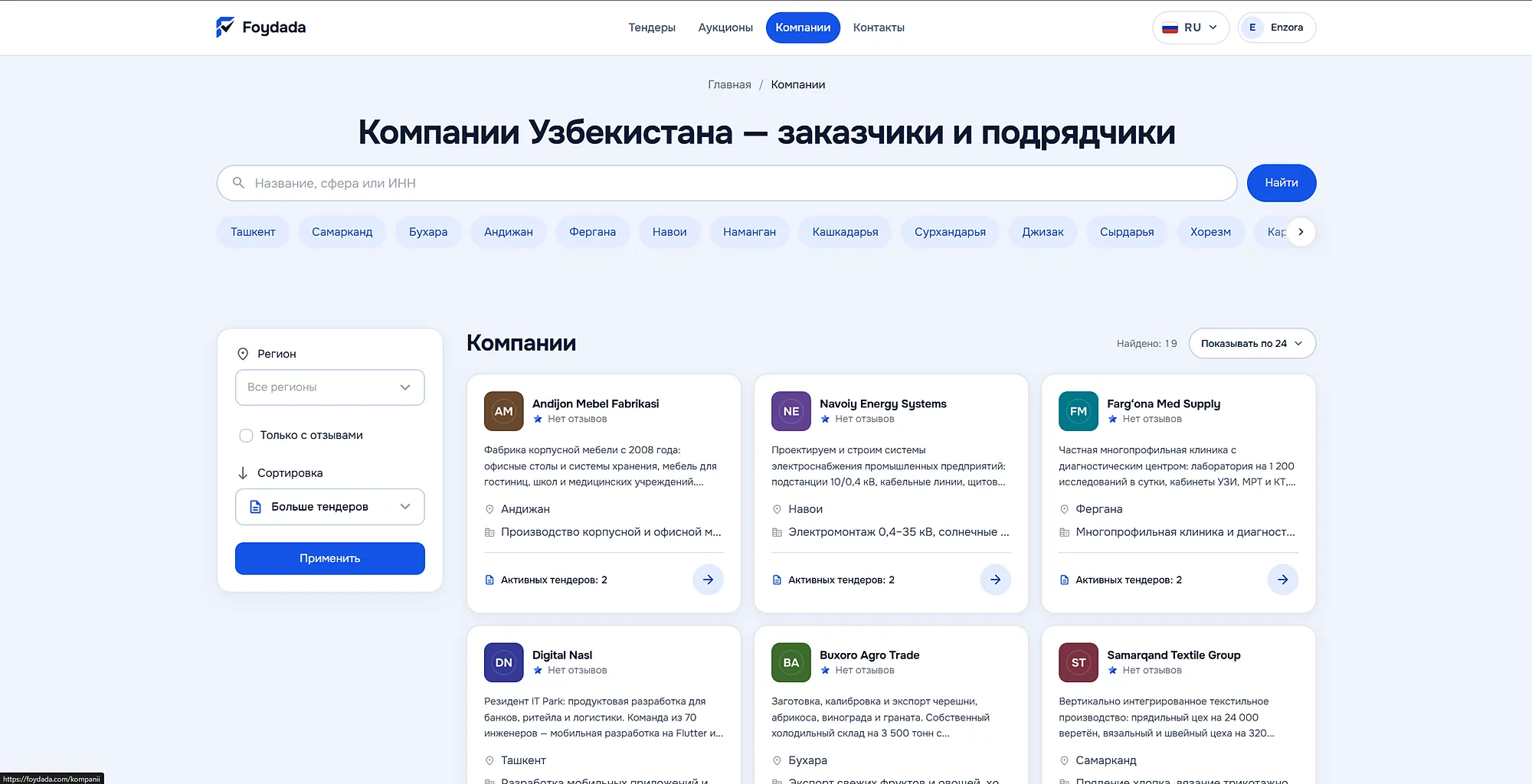
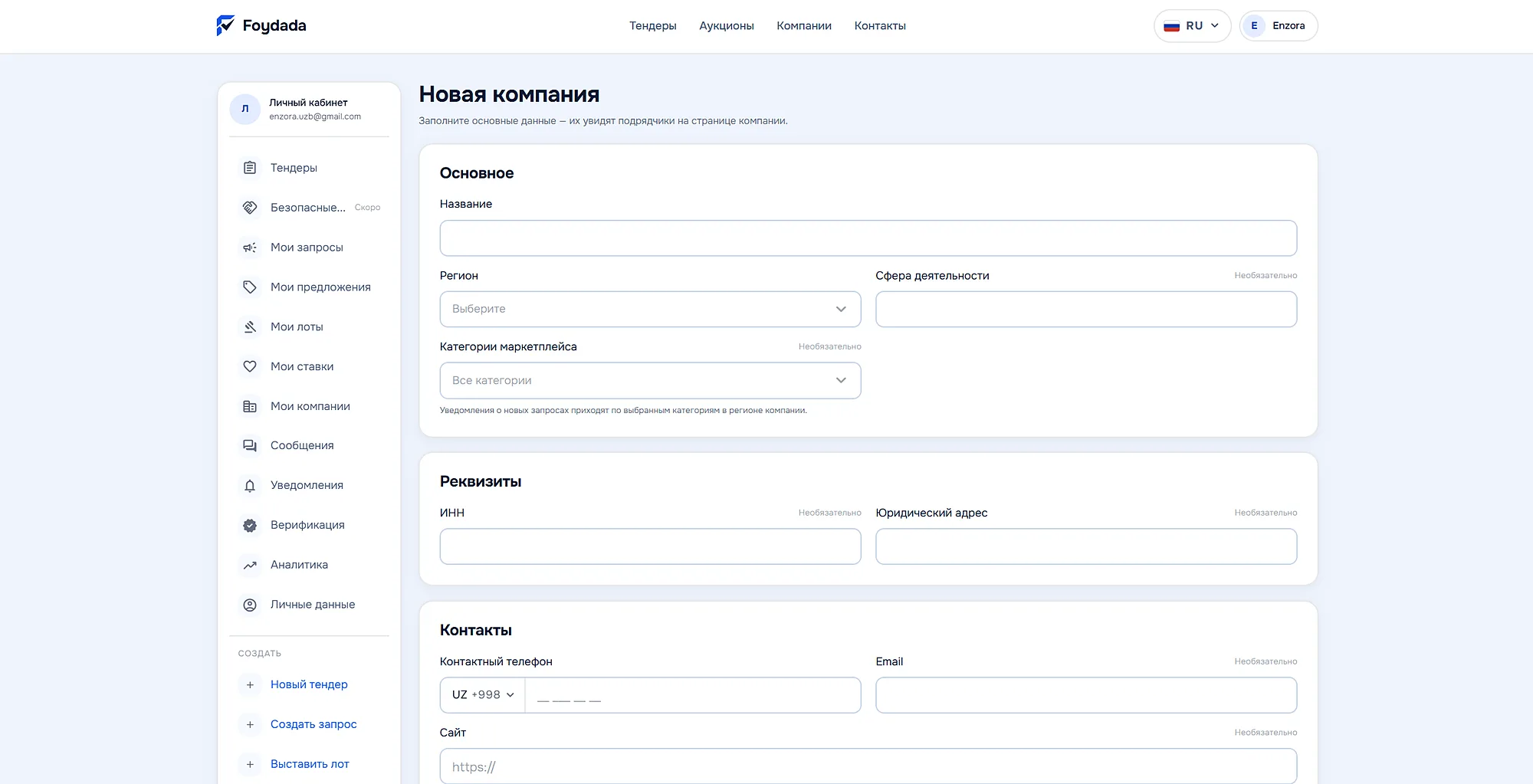
The directory finds companies by name, field of work or tax ID and filters them by 14 regions and by reviews. A company page shows its rating, reviews, details and tenders. Companies are verified by documents that stay closed to outsiders: only the owner and a moderator can open them. Only verified companies can answer requests, and a logo is cropped and compressed right in the browser, so even a phone photo goes up as a light file.
Sign-in, chat and notifications
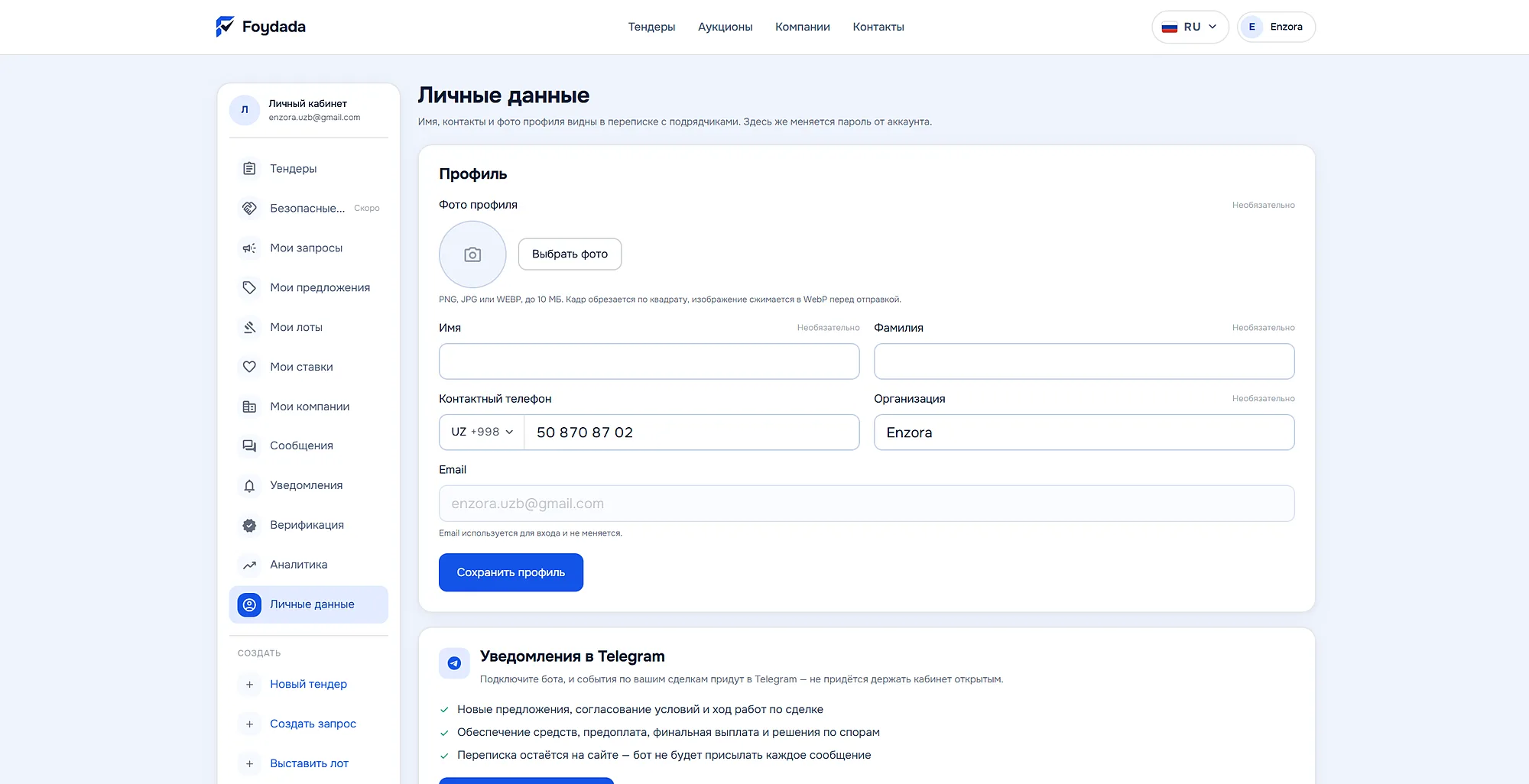
Users sign in with an email and password plus a six-digit code from the email, or with Google, and a verified browser is remembered for 30 days. The chat shows when the other side is typing and has read a message. Every notification except chat messages also reaches Telegram once it is linked in settings, and phone numbers are confirmed through the same bot. A forgotten password is recovered in three steps on one page.
Protection from bypassing and spam
Phones, @usernames, links and emails in lots, requests and the related chats are hidden at the moment of saving: three attempts a day bring a warning, five block messaging for 24 hours. Passwords are stored only in encrypted form, forms are protected from forged requests sent from other sites and from password guessing, and uploaded files are checked by their content, not their name. Content reports reach moderators in Telegram right away.
Results
The project's key outcomes in numbers.
- 3Ways to trade
Tenders, auctions and requests work under one account and meet in a shared dashboard, chat and notifications.
- 14Regions of Uzbekistan
The tender catalog and the company directory filter by 14 regions, and tenders also by 14 categories.
- 36Admin panel sections
The platform team runs 36 admin sections on its own, from tenders and lots to reports and settings, with no developer.
- 5 minAuction extension
A bid in the last 5 minutes extends the auction, so nobody can snatch a lot in the final second and everyone else has time to respond.
Design & interfaces
Key screens and interfaces of the project.
Project tech stack
The stack we used to build the solution for the client's task.
- Python
- Django
- Django Ninja
- Django Channels
- PostgreSQL
- Redis
- Nginx
- GitHub Actions
- TypeScript
- Vue.js
- Nuxt
- Sass
- GSAP
- Pinia
- Telegram Bot API
- Google Sign-In
Similar cases

Ready to become the next case?
Tell us about your task — a manager will assemble the team, calculate the estimate and send a proposal within the first hour after the request. No obligations, no drip campaigns.