CALLONE — boiler catalog website for Uzbekistan
We built a boiler catalog website for CALLONE in three languages: 22 models, 85 power options and a request form with the chosen option already filled in. The client's staff run the catalog, requests and slides in their own admin panel.
Challenge
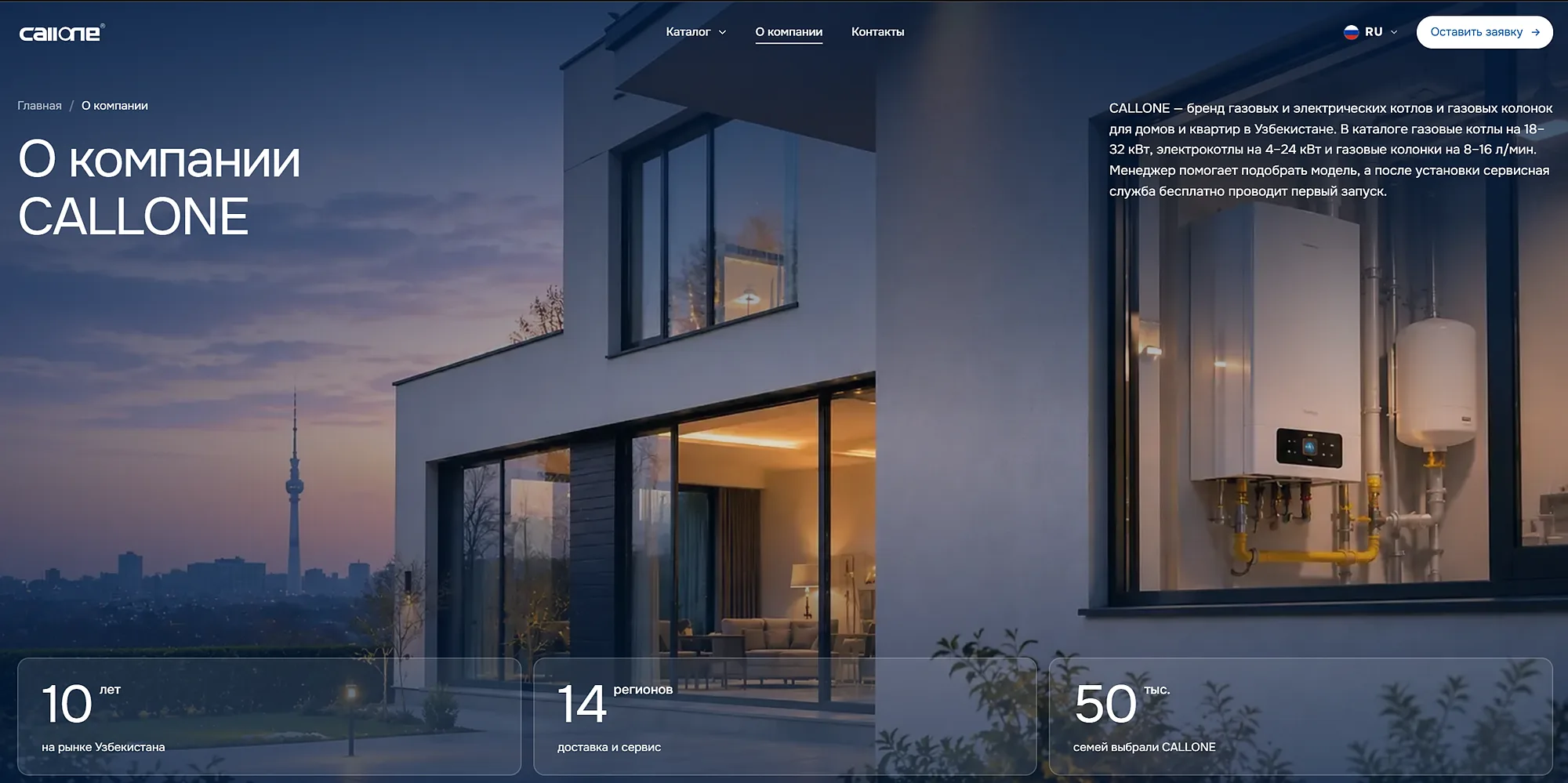
CALLONE is a brand of gas boilers, electric boilers and gas water heaters for homes, sold in Uzbekistan. The range covers 11 gas boiler series, 3 electric boiler series and 8 gas water heaters. Its buyers are homeowners who need heating and hot water, and after installation the CALLONE service team carries out the first start-up free of charge.
The CALLONE catalog existed in two forms: a 2026 PDF and a demo app with local data. It held 22 models, 85 power options, specs and photos, but not a single page a buyer could find in search and use to send a request right away. The client set two goals: a steady flow of purchase requests and catalog visibility in search. The website had to turn the PDF into a living catalog in Russian, Uzbek and English, become the buyer's first contact with the brand and explain its main promise: a free first start-up of the equipment after installation.
People choose a boiler by its numbers, not by its looks: heating output, liters of hot water per minute, the floor area it can heat. Each series comes in three or four power options with their own specs, and buyers need to see them side by side. The second difficulty was similar models: in the source data, the 11 gas boiler series shared one description and one list of benefits, so the texts had to be built on what sets each series apart (panel, display and functions), or the pages would have come out almost identical. The third was prices: the catalog has none, so the site had to say “Price on request” honestly and never promise search engines something the page does not show.
There is no cart and no online payment by design: a purchase goes through a call with a manager, so the whole buyer journey comes down to one request. There is no sign-in or personal account either, which means the form is open to everyone and has to be protected from bots without extra steps for real people. By law, personal data is stored only on servers in Uzbekistan. Texts, photos, prices and home page slides had to change without a developer, because the client's staff run the catalog. And heavy parts such as the full-screen photo viewer and animations could not slow down the first page load.
The audience is buyers all over Uzbekistan who choose a boiler on a phone or a computer. They need to understand within a couple of minutes which power suits their home and leave a phone number, and those comparing several series need to jump to the next model quickly. Success meant four things: every model has its own page with the specs of all its options; the request goes out straight from the model page with the chosen power already filled in; every page in every language is marked up for search; and the manager sees in the admin panel which model and power the buyer picked and moves the request through statuses.
Solution
We built the website around the boiler model: each series has its own page where the buyer picks the power, sees the specs and price of that option and sends a request on the spot.
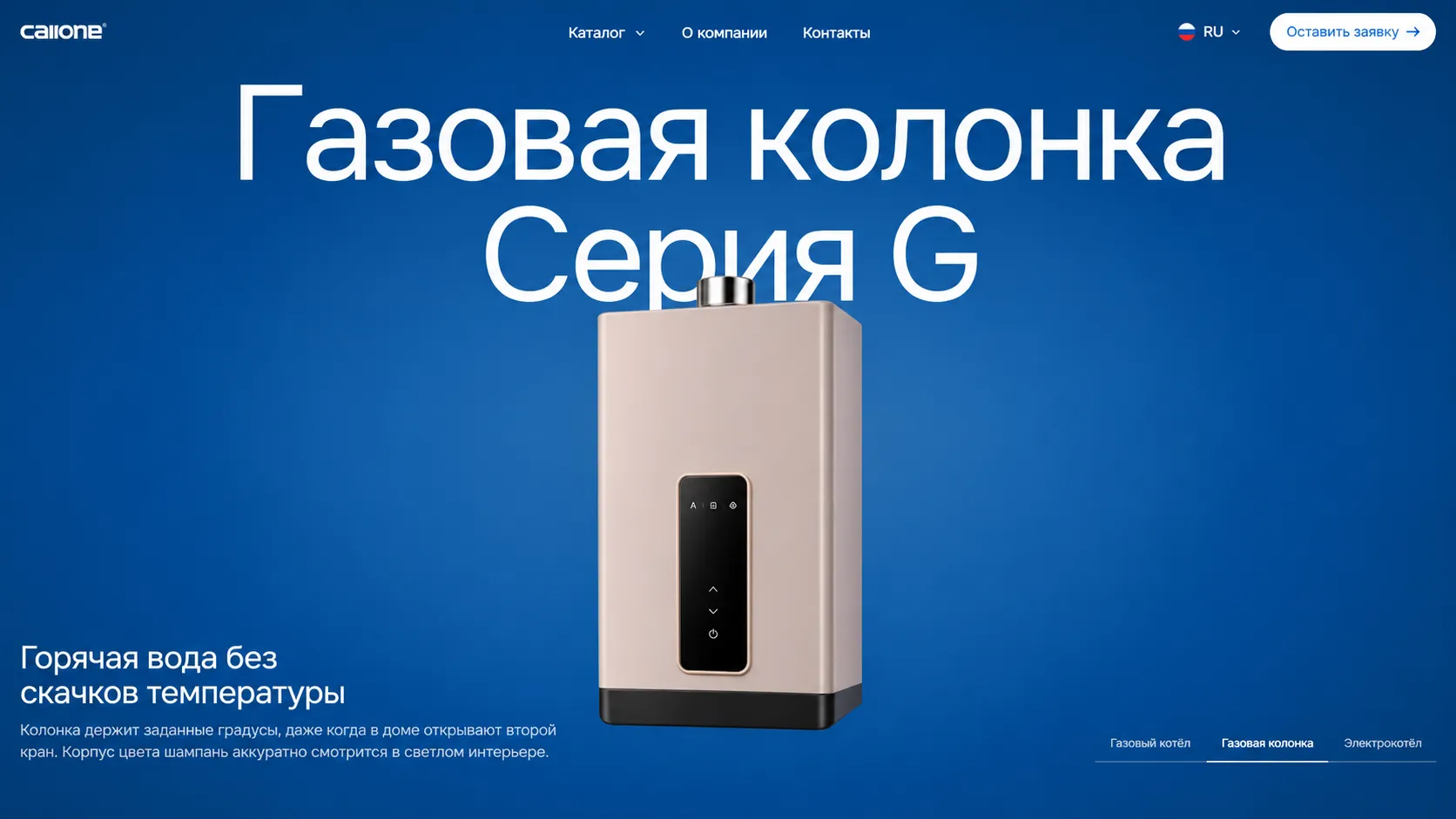
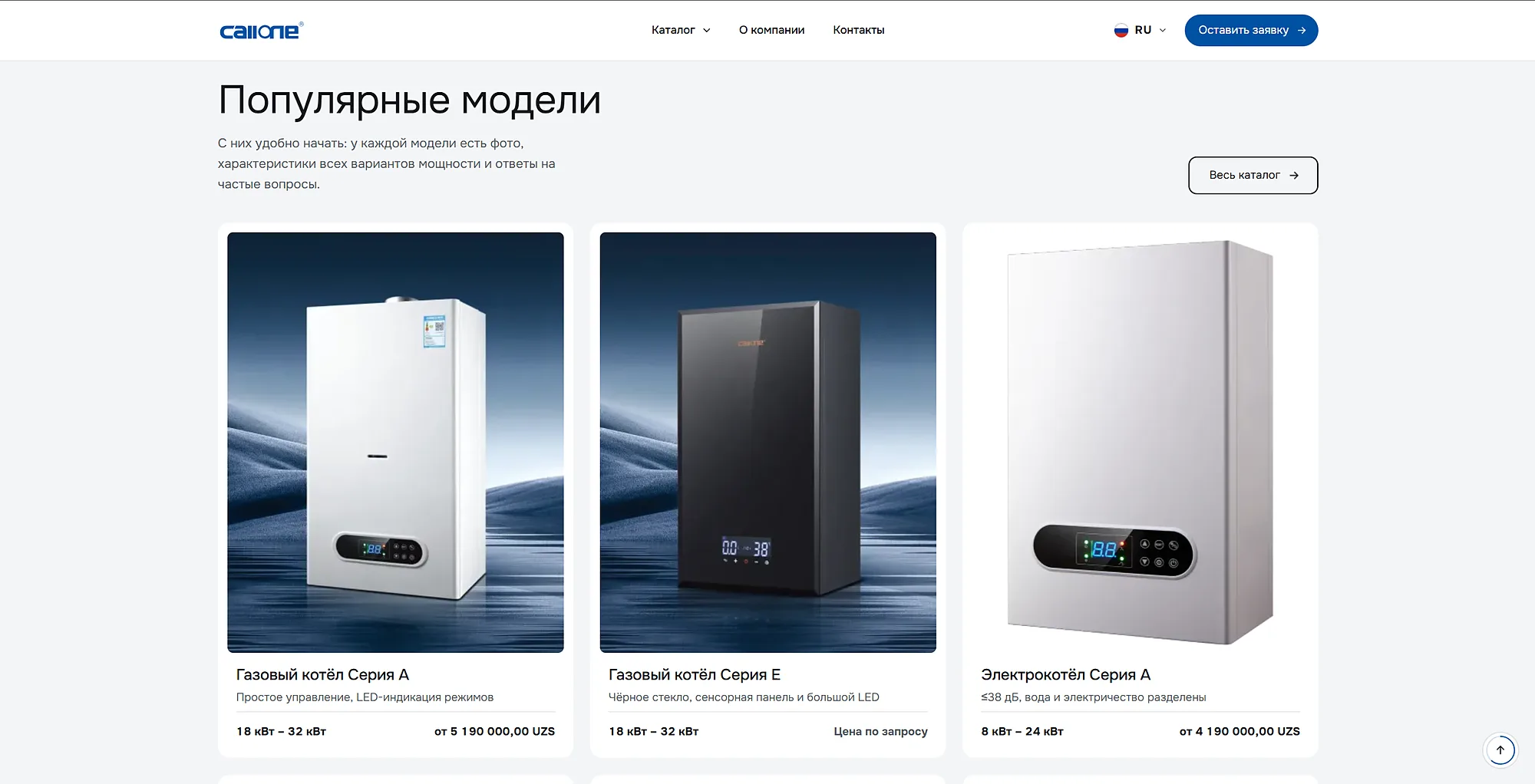
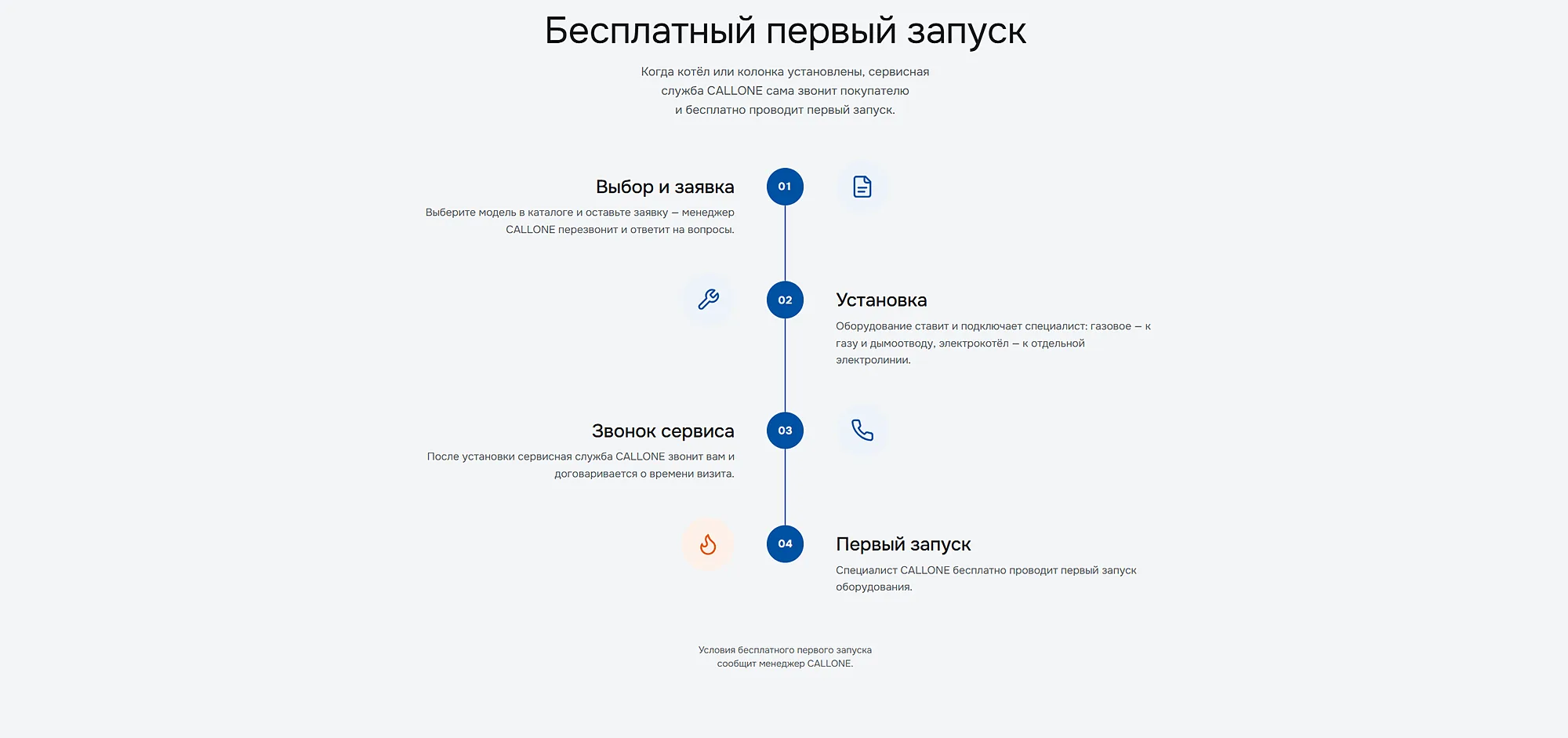
The home page opens with a slider of models managed from the admin panel, followed by categories, popular models, benefits, the steps of the free first start-up, FAQ and the request form. The catalog has three categories (gas boilers, electric boilers and gas water heaters) plus a guide on choosing between gas and electricity and sizing the power to the floor area. A category page adds an intro, power selection tips and FAQ. A model page brings a zoomable photo gallery, the power switch, benefits, a specs table, a description, questions, the request form and other models from the same category. In the menu, the catalog opens as a list of categories, and phones get a bottom navigation bar.
The site runs on Nuxt 4 with server-side rendering: each page reaches the browser with its data already in place, so search engines and people on slow mobile internet see it at once. The catalog, requests and photos live on one C++ server (Drogon) with a PostgreSQL 16 database, which feeds both the site and the admin panel; photos are stored in the light WebP format and resized for each screen. We built the admin panel on React Admin, a ready base for tables and forms, and all parts of the site start in Docker with one command. Every change is checked automatically: the site and admin panel are built, and server tests and code checks run.
Power options without a reload
The buyer picks a power option on the model page, and the key figure tiles (heating, hot water, floor area), the price and the highlighted column of the specs table change at once. Nothing reloads, and search engines see the main option on the page right away. When no price is set, the page shows “Price on request” instead of a number. So 18 and 24 kW are compared in one place.
A request with the chosen option
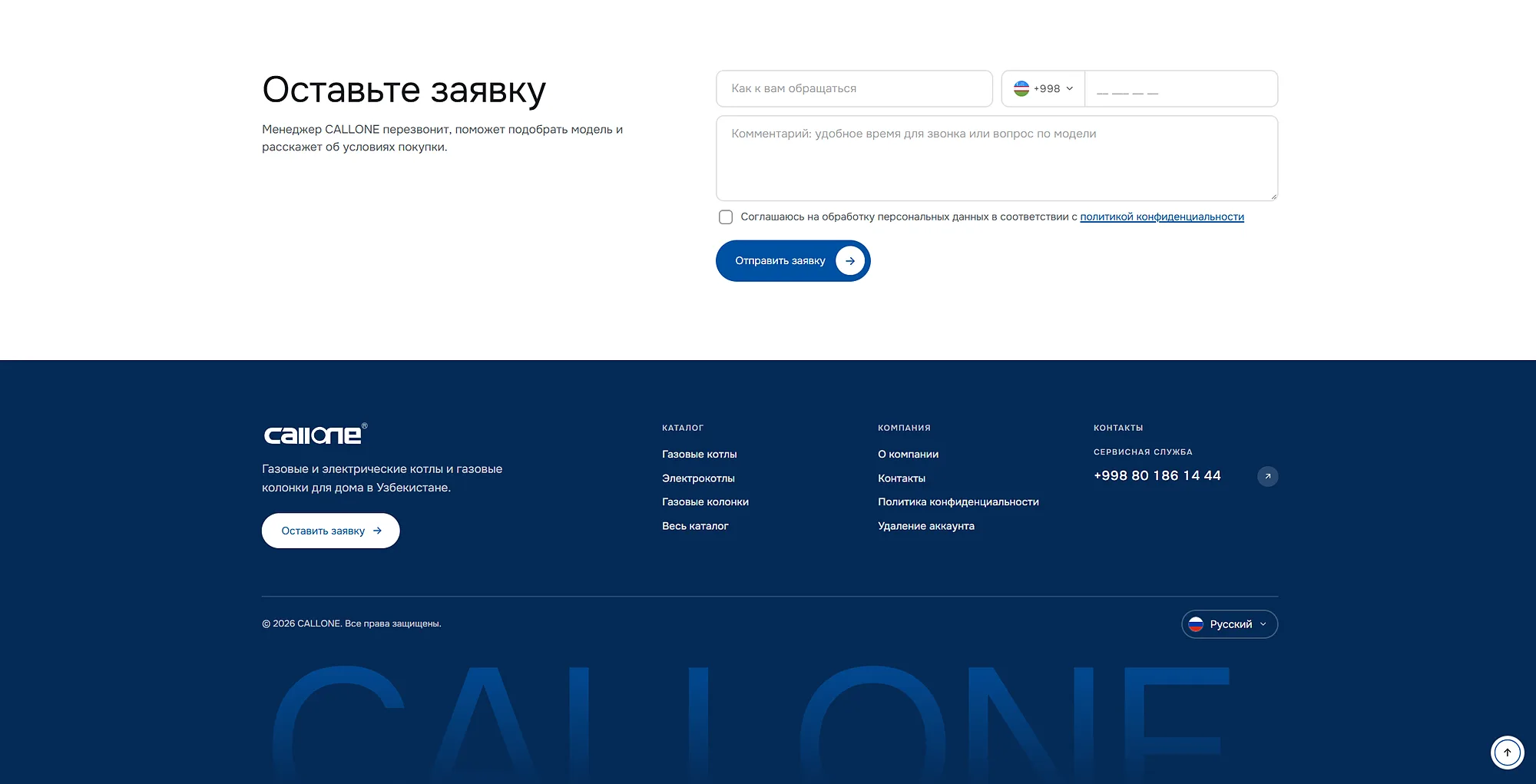
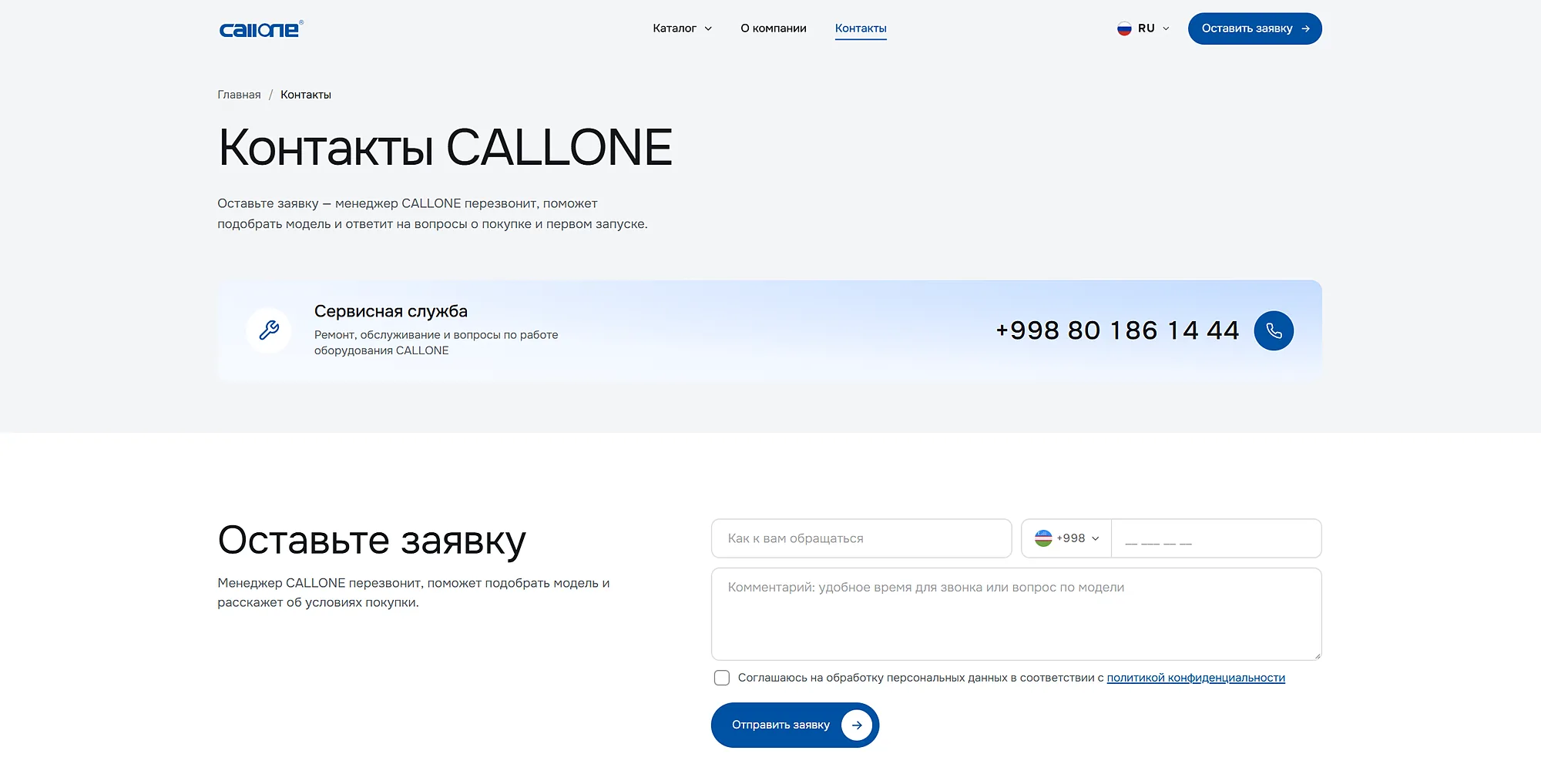
The “Send a request” button leads to a form on the same page, with the chosen power already filled in. The form asks for a name, a phone number with a +998 mask and an optional comment, and consent to data processing is required. After sending, the buyer sees “Request sent — a manager will call you”, and the request reaches the admin panel with the model and option, so the manager calls already knowing which boiler it is.
A form protected from bots
The site has no sign-in, so the form is open to everyone. Bots are stopped by a hidden trap field that only programs fill in and by a Cloudflare Turnstile check, and the server accepts no more than five requests per minute from one address. The limit counts each visitor separately, so one bot cannot block the form for everyone else. Analytics, once enabled, never receives form values.
The client's staff run the catalog
The admin panel has three catalog sections: categories, models and options. Texts are edited on RU, UZ and EN tabs, photos go into the model gallery, and a similar model can be duplicated in one click. The catalog is imported and exported as CSV, Excel and JSON files: the panel maps the columns and shows a preview before writing. That is how we prepared all 22 models and 85 options for upload. Requests export the same way.
A home page that shows the models
The first screen is a slider of models: the series name rises letter by letter, the product photo lifts smoothly, and the slides change on their own or with a swipe. The model, photo and texts of each slide are chosen in the admin panel. The first screen appears at once, without waiting for scripts to load. Below come a flame video and sections that come alive on scroll, and “reduce motion” switches the animations off.
SEO in three languages
Every page has its own title and description for search results, and addresses are the same in every language. The markup tells search engines which language version to show and describes the company, catalog, questions and sections; product markup with a price goes only to a model that has one. The sitemap builds itself from the catalog, a script checks the markup of every page, and a separate file describes the catalog for AI search.
Results
The project's key outcomes in numbers.
- 22Model pages
11 gas boilers, 3 electric boilers and 8 gas water heaters: each series has its own page with specs and a request form.
- 85Power options
Each option has its own figure tiles, specs and price, and options without a price are marked “Price on request”.
- 3Site languages
Russian, Uzbek and English versions with their own addresses, and the markup tells search engines which one to show each person.
- 90Pages in three languages
30 pages in each language (home, catalog, 3 categories, 22 models, About, Contacts and the privacy policy), all in the sitemap for search engines.
Design & interfaces
Key screens and interfaces of the project.


Project tech stack
The stack we used to build the solution for the client's task.
- C++
- Drogon
- PostgreSQL
- Docker
- Nginx
- TypeScript
- Vue.js
- Nuxt
- Sass
- GSAP
- Pinia
- Fancybox
- MUI
- React Admin
- Cloudflare Turnstile
Similar cases
Ready to become the next case?
Tell us about your task — a manager will assemble the team, calculate the estimate and send a proposal within the first hour after the request. No obligations, no drip campaigns.