Binotex — construction equipment rental website
We built a construction equipment rental website for Binotex: a fleet catalog with key specs, a short request form and three language versions. Rental requests grew by 52%, and clients now choose machines 38% faster.
Challenge
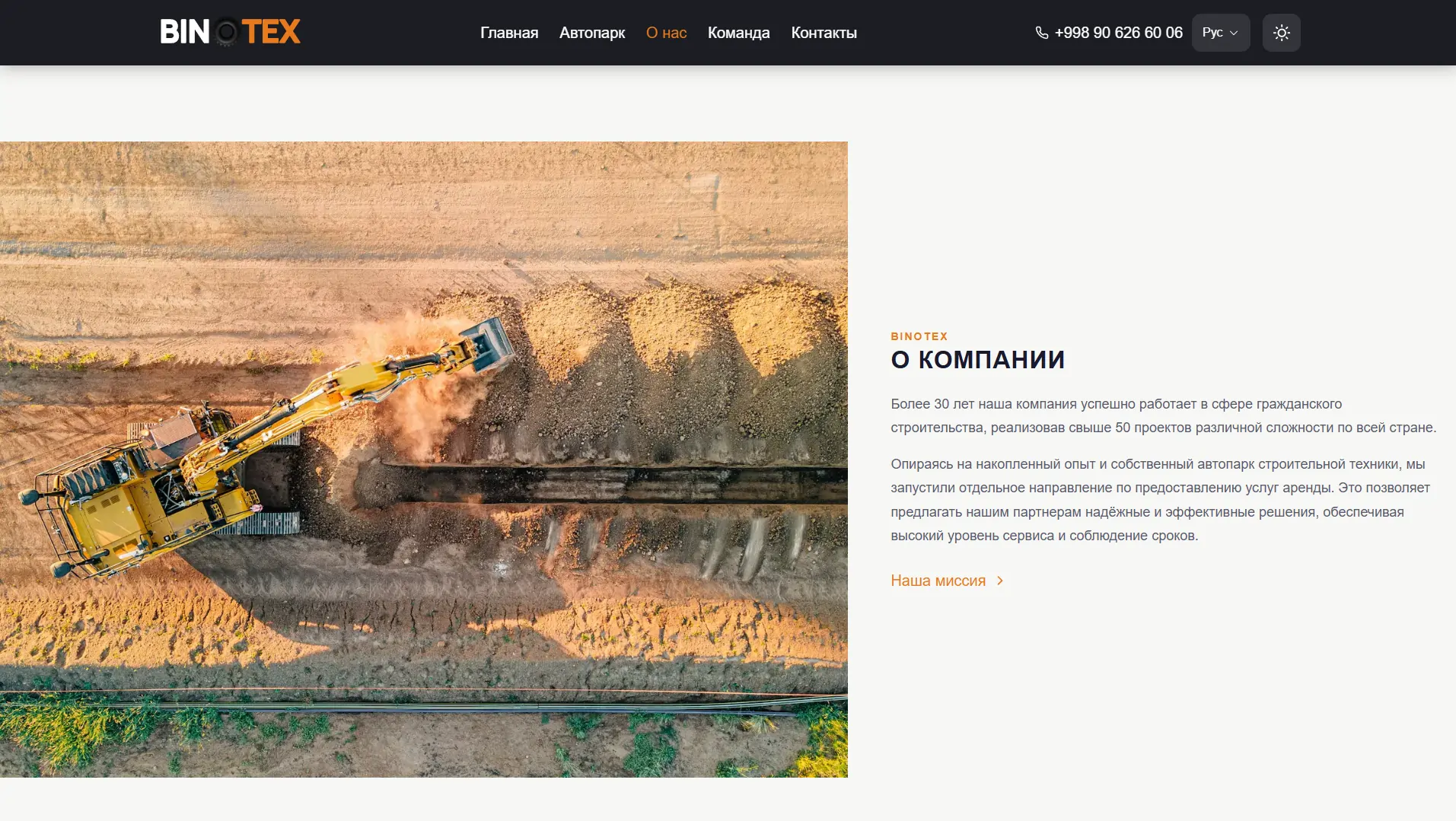
Binotex is a Tashkent construction company with more than 30 years in civil construction and over 50 completed projects across the country. Building on its own fleet, the company launched a separate line of business: heavy equipment rental for contractors and developers across Uzbekistan.
The rental business was new, but the fleet was large: truck cranes, concrete pumps, bulldozers, rollers, mixers, loaders, dump trucks and cement tankers. Yet there was nowhere to show it. Clients learned about the machines over the phone or by word of mouth, and every conversation began with listing what was actually available.
Heavy equipment is chosen by specs, not by pictures. A site manager needs to know how many tonnes a crane can lift, how high a concrete pump can deliver the mix and how much a bulldozer blade can move. When those numbers are missing from the website, the choice moves back to the phone, and requests get lost between calls.
The second constraint is the client. Most often it is a foreman or a procurement manager standing on site with a phone in hand and no time for long forms. They need to say the essentials in a minute: which machine, for how long and how to reach them. Registration, a customer account or a ten-field form simply do not work in that moment.
Finally, the website had to run without a developer. The fleet grows, machine specs change, and clients speak Russian, Uzbek and English. The company needed a system where a Binotex employee adds machines, photos and translations on their own, and where 30 years of experience and 50+ projects are visible from the first screen and build trust.
Solution
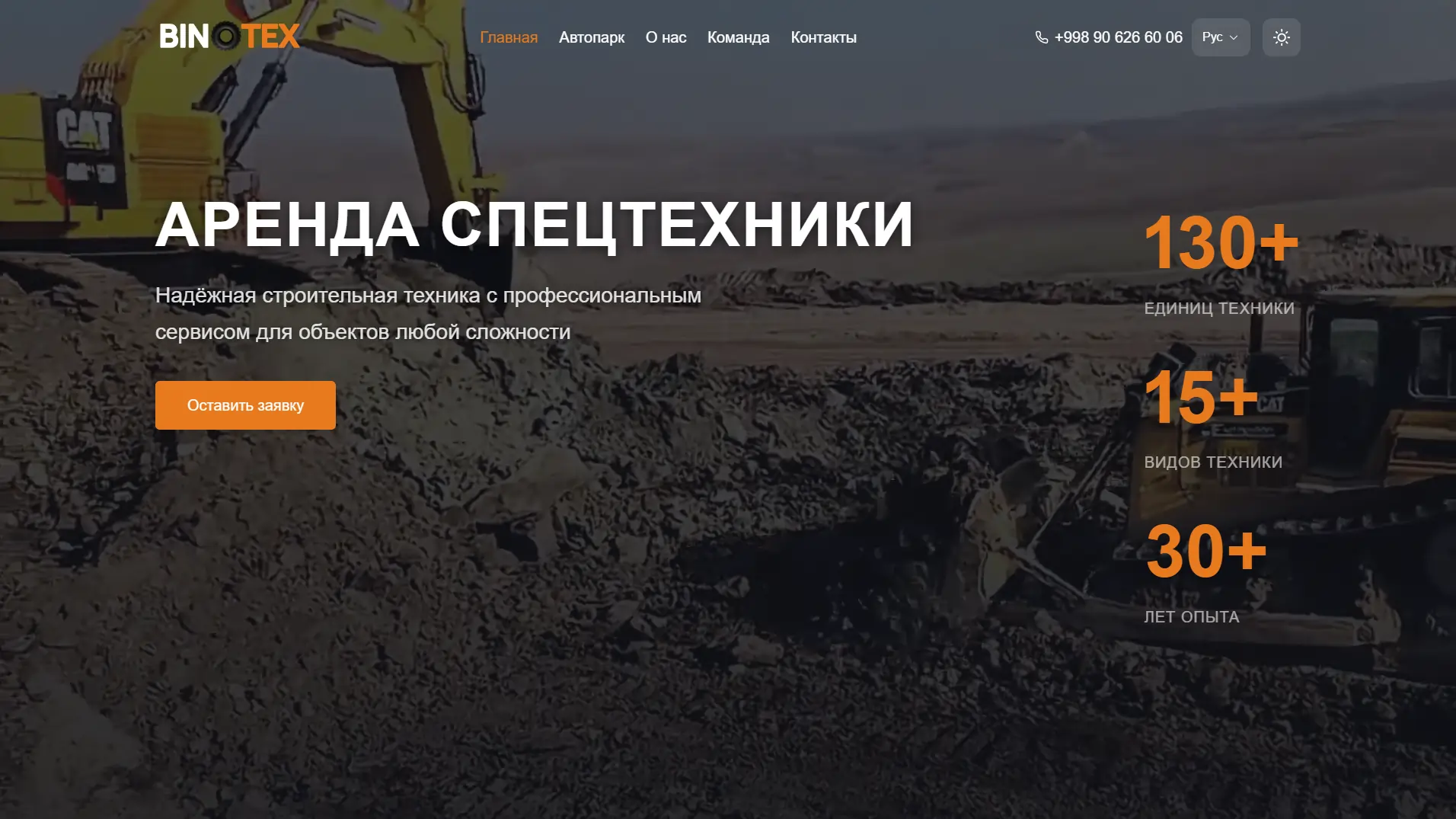
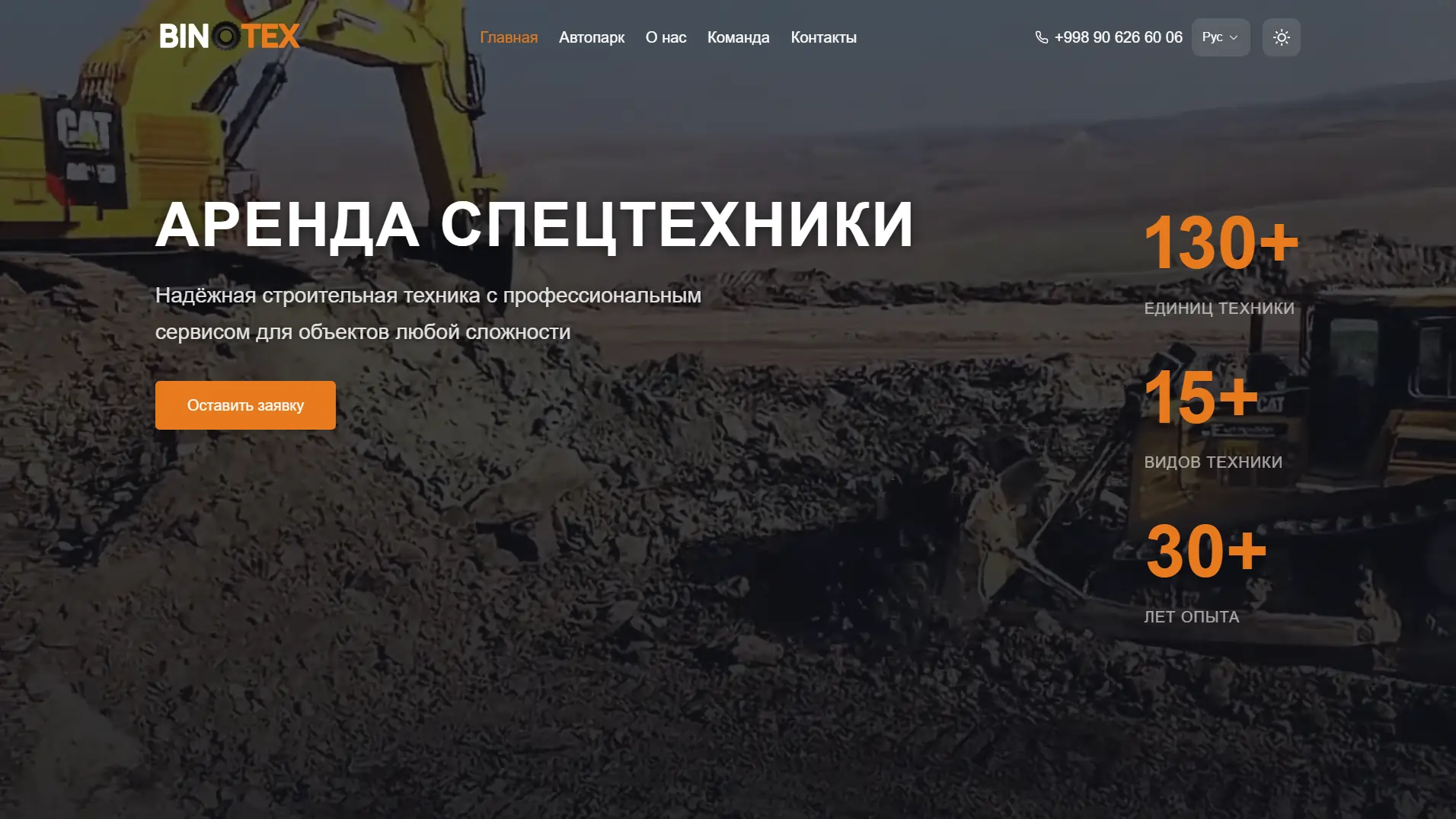
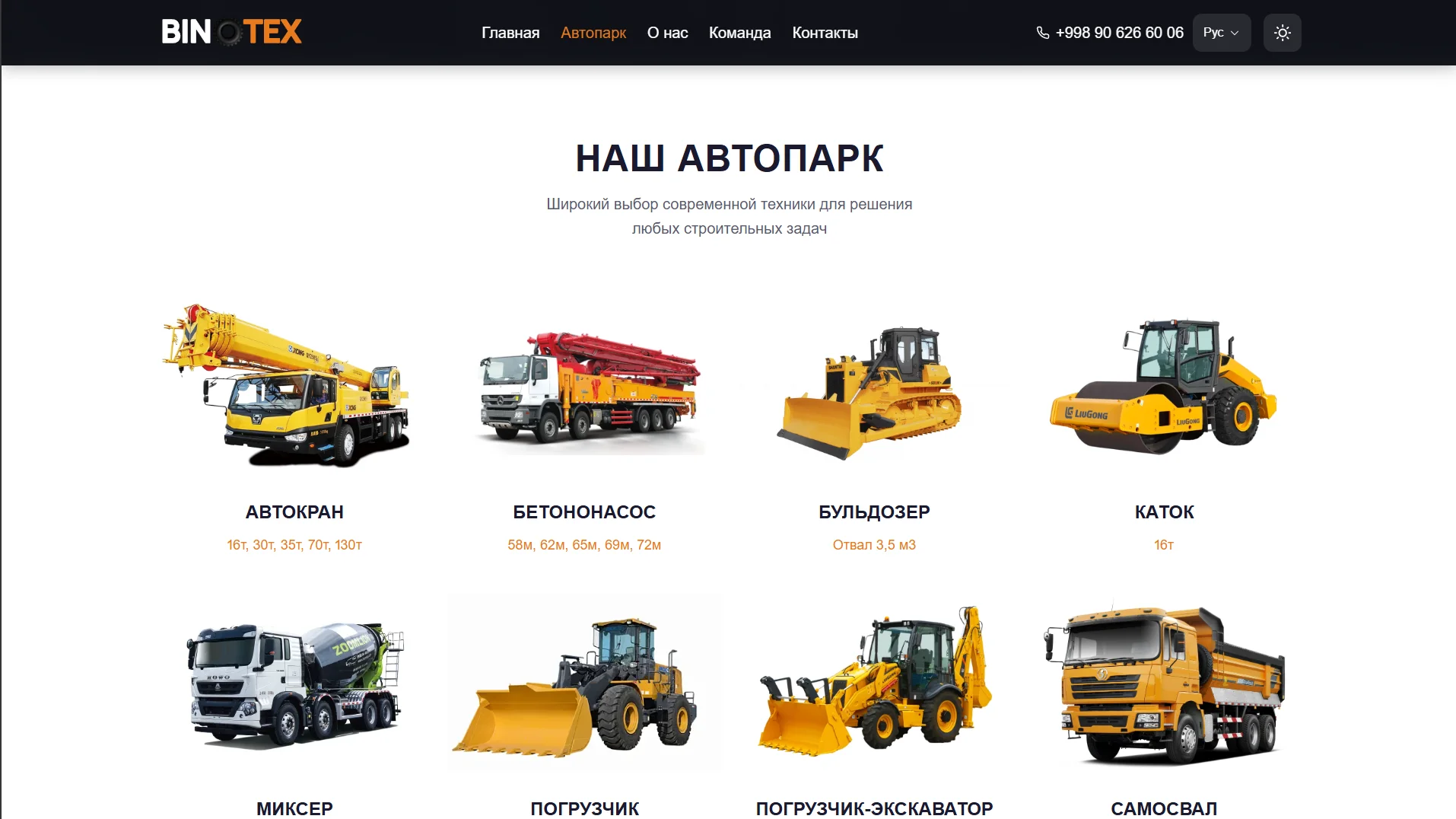
We built the website around the fleet. The first screen states what the company does and shows the key numbers: units of equipment, types of machines and years of experience. The core section is the fleet catalog, where every machine gets its own card with a photo, the main specs and an order button.
The request form comes down to three fields: name, a phone number with a country code picker and a short message about the machine and rental period. Requests are stored in the admin panel, so none of them get lost, and the phone number and Telegram are always one tap away. The About and Team sections answer the trust question with the company story, its mission and photos of the machines on real sites.
Under the hood it is a single-page React application built with Vite, with lazily loaded sections and smooth animations. The catalog, team and copy come from a Django REST Framework API and are edited in the Django admin in all three languages at once. The website supports light and dark themes and works equally well on a desktop and on a phone right on the construction site.
A fleet catalog with specs
Every type of machine got a card with a photo and the main parameters: truck cranes lifting from 16 to 130 tonnes, concrete pumps delivering from 58 to 72 metres, the bulldozer blade volume. A client checks a machine against the job on site without waiting for a manager's call.
A three-field request form
The form asks only for a name, a phone number with a country code picker and a short message about the machine and rental period. Every fleet card has its own order button, so getting from a chosen machine to a submitted request takes seconds on a desktop and on a phone.
The client runs the catalog
Machines, photos, display order and descriptions live in the Django admin. When a new machine joins the fleet, a Binotex employee adds it on their own, and the card appears on the website without a developer. The team section is updated the same way.
Three languages, one admin
The Russian, Uzbek and English versions switch from a single control in the header. Translations of machines and copy are stored next to the original, so a new machine appears in every language at once, and clients from different regions see the website in the language they prefer.
Trust from the first screen
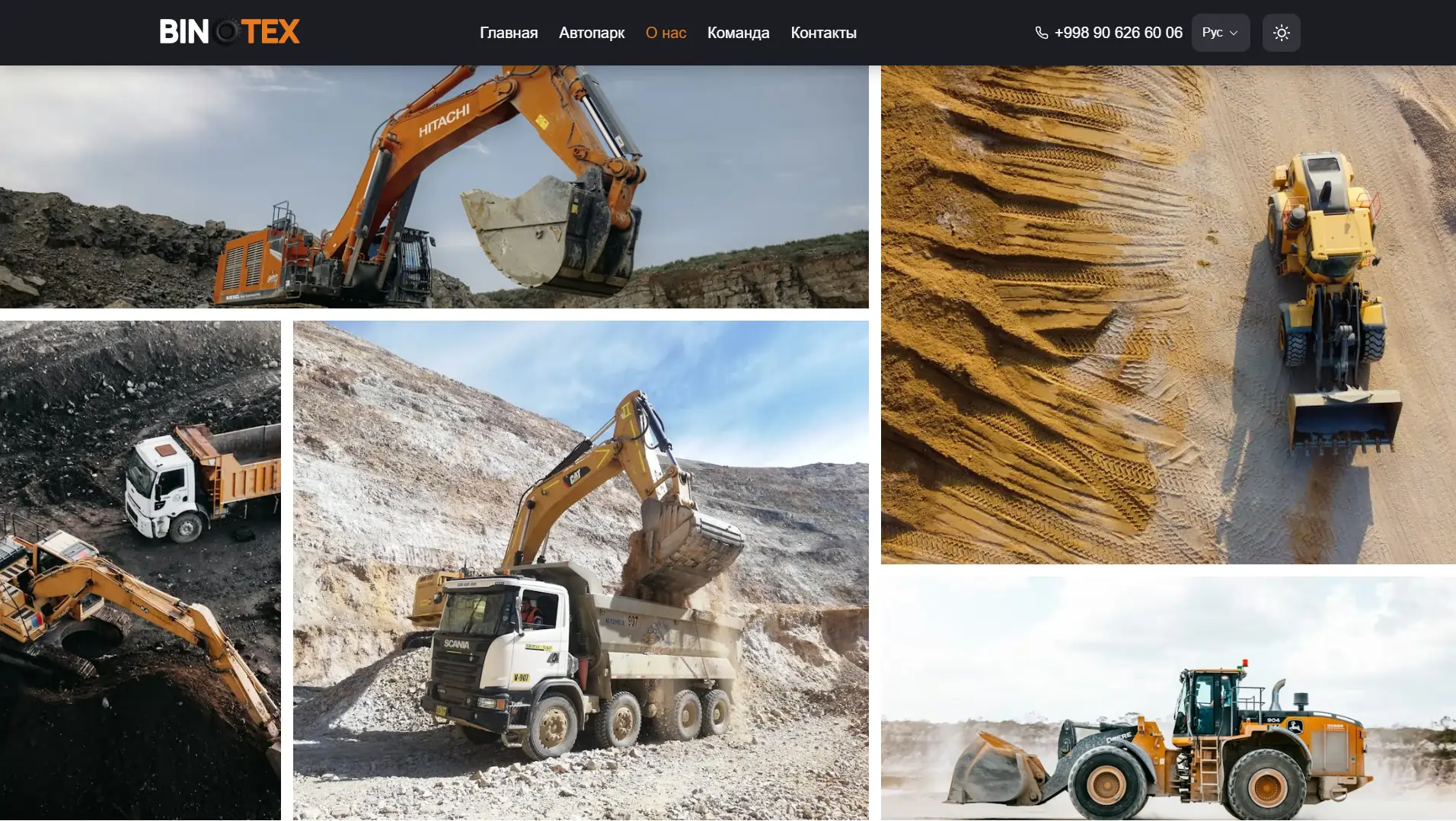
The company's key numbers, 130+ units of equipment, 15+ types of machines and 30+ years of experience, sit on the first screen. The About section tells the story and mission, and the photo gallery shows machines on real construction sites rather than studio renders.
A light front end for the site
The website is built with React and Vite: sections load only when needed, animations never slow the interface down, and light and dark themes switch with one button. The phone number and Telegram are available in the header and footer, so a client can get in touch from any screen.
Results
The project's key outcomes in numbers.
- +52%Rental requests
A catalog with specs and a short form increased the number of requests by half.
- −38%Time to choose a machine
Machine specs are visible right on the cards, so clients find the right equipment faster.
- 3Website languages
Russian, Uzbek and English versions for clients across Uzbekistan.
- 10 daysFrom kickoff to launch
Design, front end, API and the catalog admin took ten days.
Design & interfaces
Key screens and interfaces of the project.
Project tech stack
The stack we used to build the solution for the client's task.
- Python
- Django
- Django REST Framework
- Nginx
- React
- Vite
Ready to become the next case?
Tell us about your task — a manager will assemble the team, calculate the estimate and send a proposal within the first hour after the request. No obligations, no drip campaigns.