ARROW — landing page for a logistics company
We built a three-language landing page for the logistics company ARROW, with shipment tracking and quote requests on the first screen, services, process steps and an FAQ. It went live five days after the brief, and Lighthouse rates it 98/100.
Challenge
ARROW is a logistics company that handles freight and delivery end to end and positions itself as a premium service. Its website presents three lines of business: international air, sea and road freight, logistics for online stores and door-to-door delivery.
ARROW handles freight and turnkey delivery, and it needed a logistics company landing page that sums up the key points within a minute: what cargo the company takes on, by which mode of transport and on what terms. In logistics, clients trust a sense of control rather than pretty pictures, so the page had to convey scale and order from the first screen instead of generic promises of reliability.
Visitors arrive with different goals. One wants to know where a shipment is right now, another needs a quote for a new consignment, a third has a question about customs or insurance. Squeeze all of that into a single “Contact us” button, and some people leave to look for answers elsewhere without ever submitting a request.
ARROW's audience speaks Russian, Uzbek and English. Each version needed its own address so that search engines show people the page in their own language. At the same time, service descriptions, working steps and FAQ answers had to match across all three versions down to the last detail.
The visual brief called for a cinematic feel: large shots of trucks and ships, video and animation on scroll. Scenes like that easily overload a page and get in the way on a phone, and the timeline was tight: five days from brief to launch. The job was to pair a striking picture with speed and not lose a single request along the way.
Solution
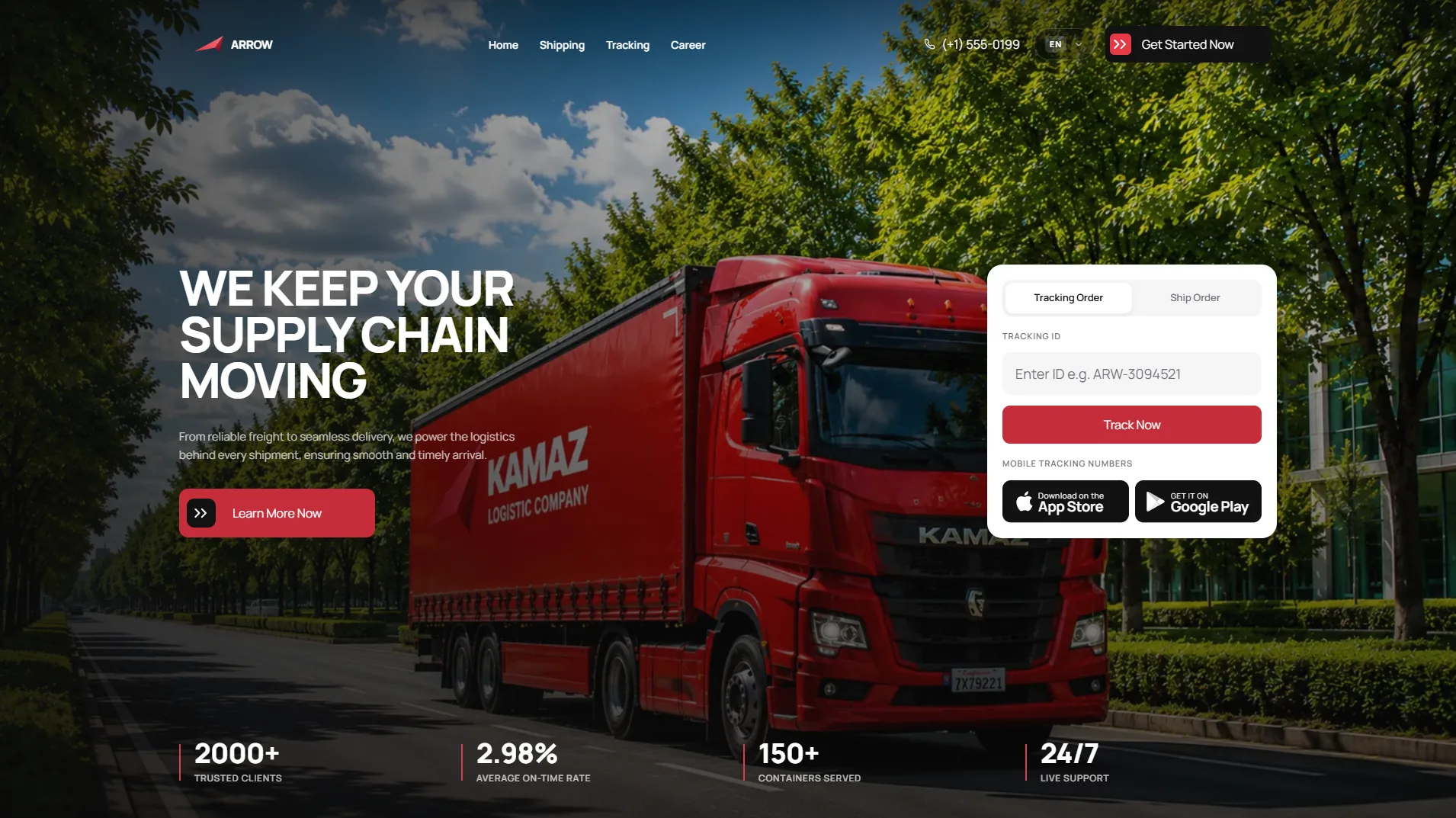
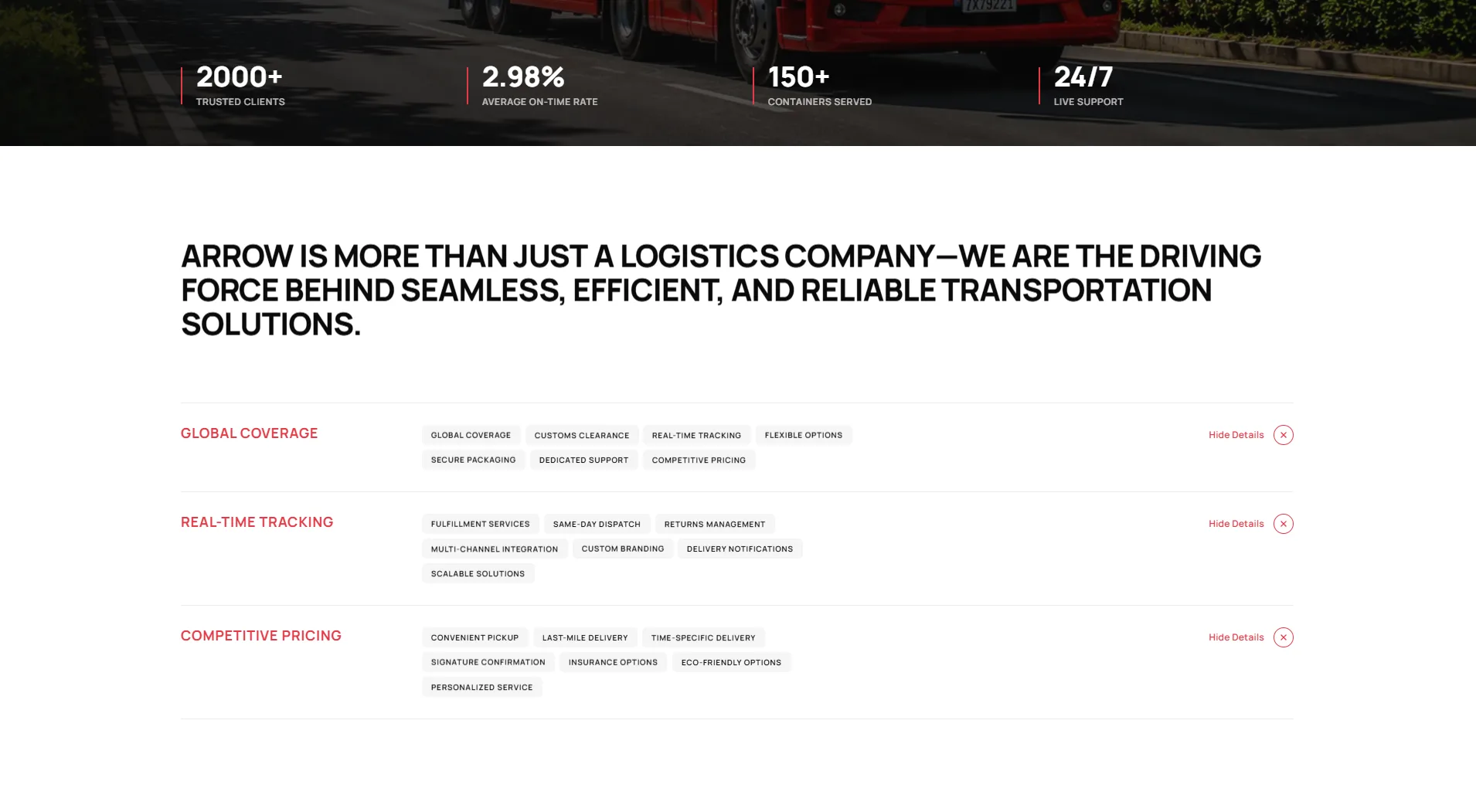
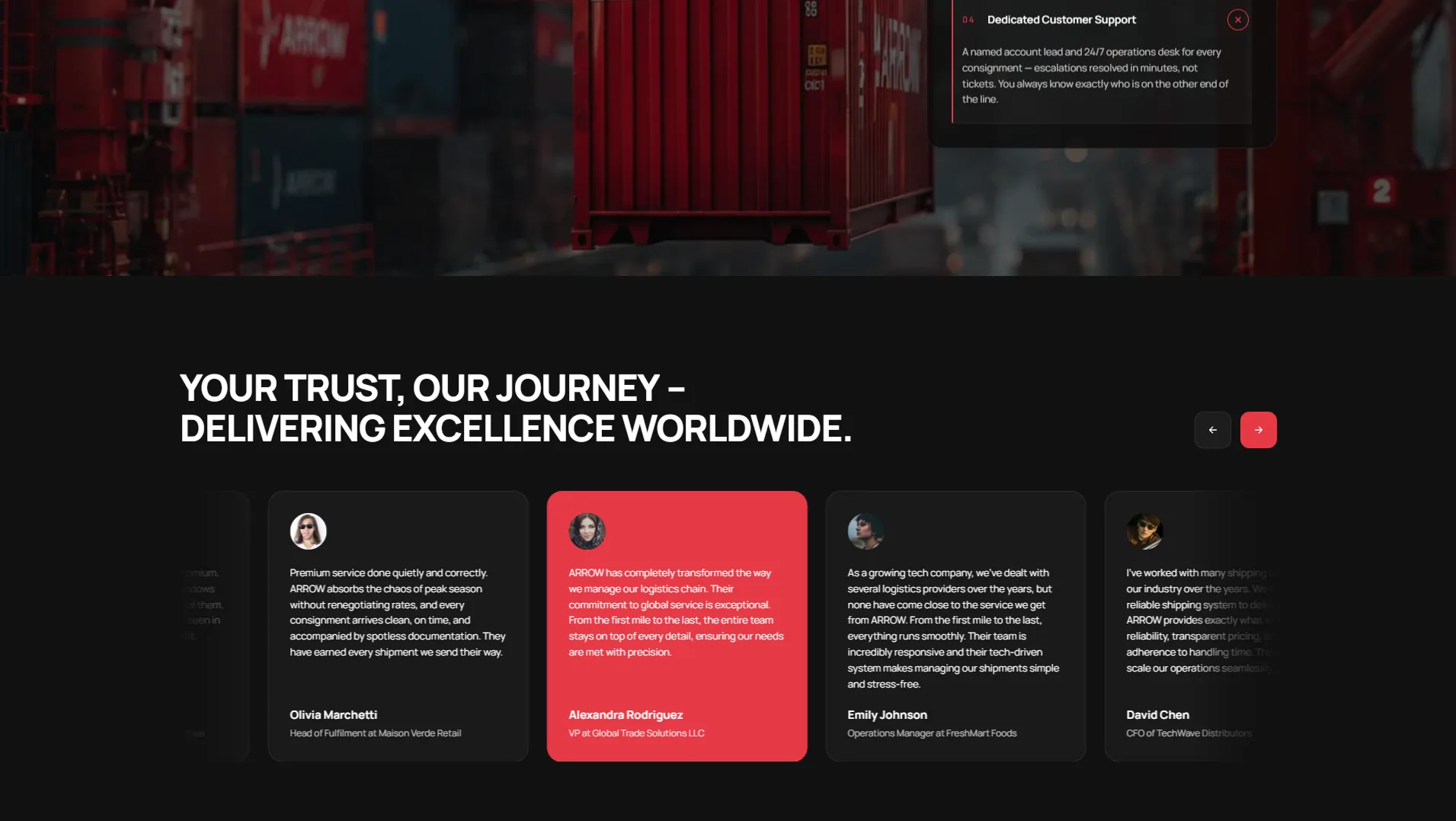
We structured the landing page like a shipment's route. The first screen offers an action straight away, tracking a consignment or requesting a quote, followed by the company manifesto, three services, the container scene, differentiators, testimonials, four working steps and a block where frequent questions sit next to the request form.
Every scenario got its own entry point. The first-screen widget accepts a tracking number or a shipment ID, while the form at the bottom takes a question with contact details. All three channels write requests to Google Sheets via Apps Script, each to its own sheet and tagged with the visitor's language, and a hidden honeypot field plus a submission rate limit filter out spam without a captcha.
The site is a React and TypeScript single-page app bundled by Vite. The scroll scenes run on GSAP ScrollTrigger and respect the system's reduced-motion setting. Each of the three language versions has its own URL with hreflang markup, and the site itself is hosted on Vercel.
Tracking and quotes up front
The first-screen widget has two tabs: track an order by its number or send a shipment ID for a quote. A request is logged instantly and the team follows up with details, while the App Store and Google Play buttons honestly say that the mobile app is on its way.
Three services, three scenes
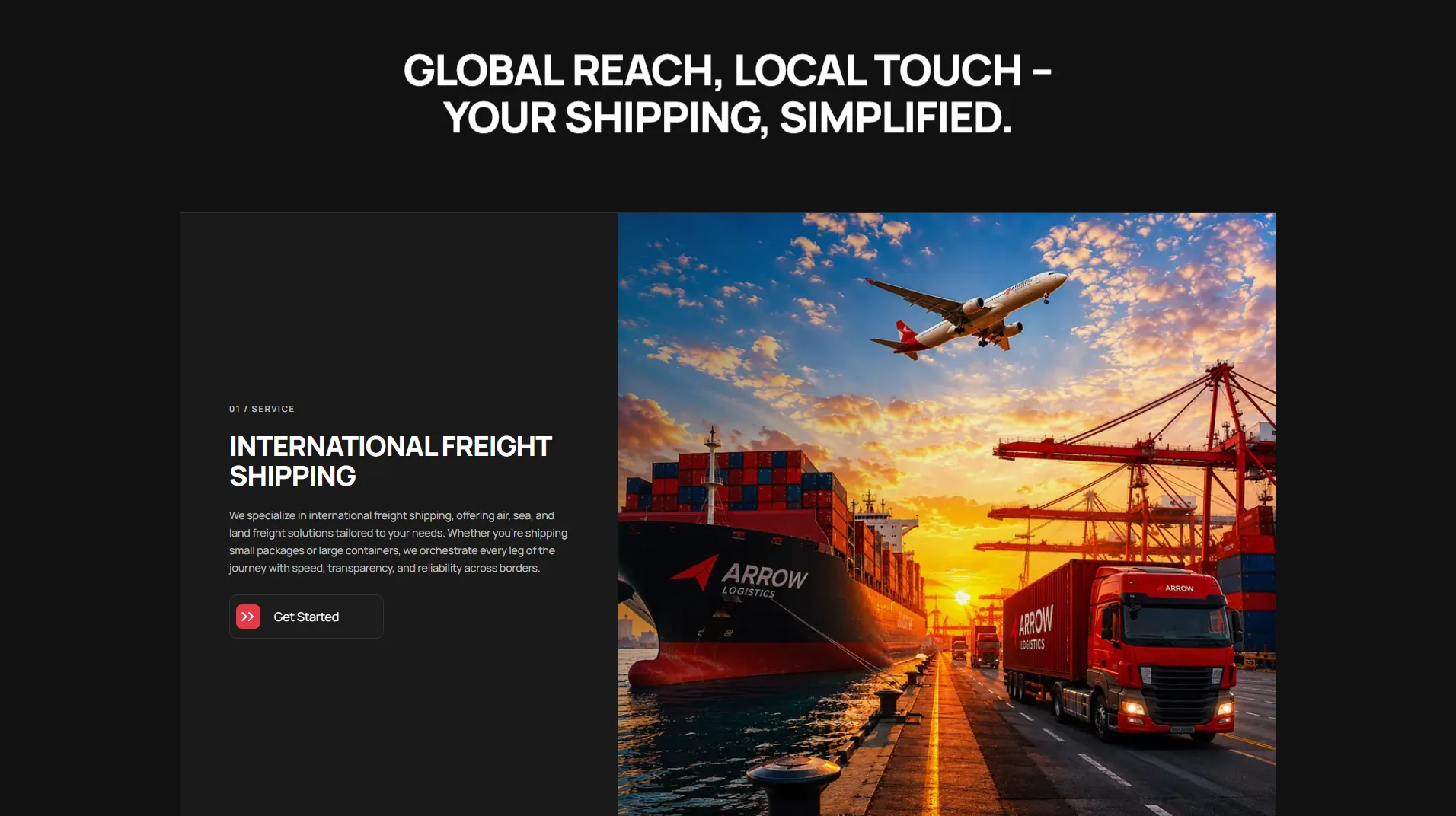
International air, sea and road freight, logistics for online stores and door-to-door delivery each get a numbered scene with a large photo, a short description and a call to action. A visitor sees at once which of the three matches their cargo.
A container on a crane hook
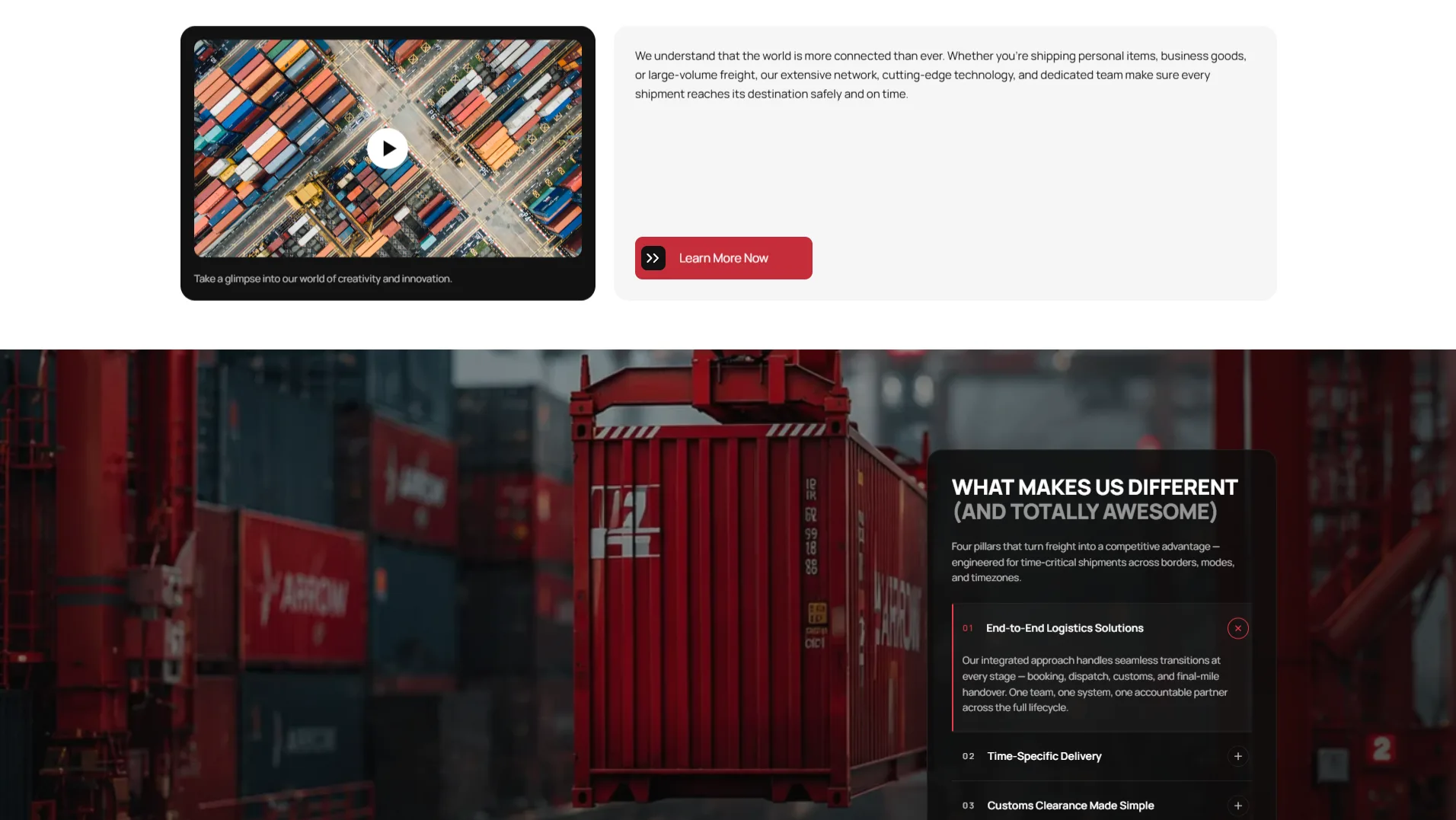
As the visitor scrolls, a branded container rises on a crane hook: the scene is pinned to the screen and tied to the scroll with GSAP. Next to it sits a video teaser about the company, which opens in a modal window and never takes the visitor off the page.
Process and strengths in brief
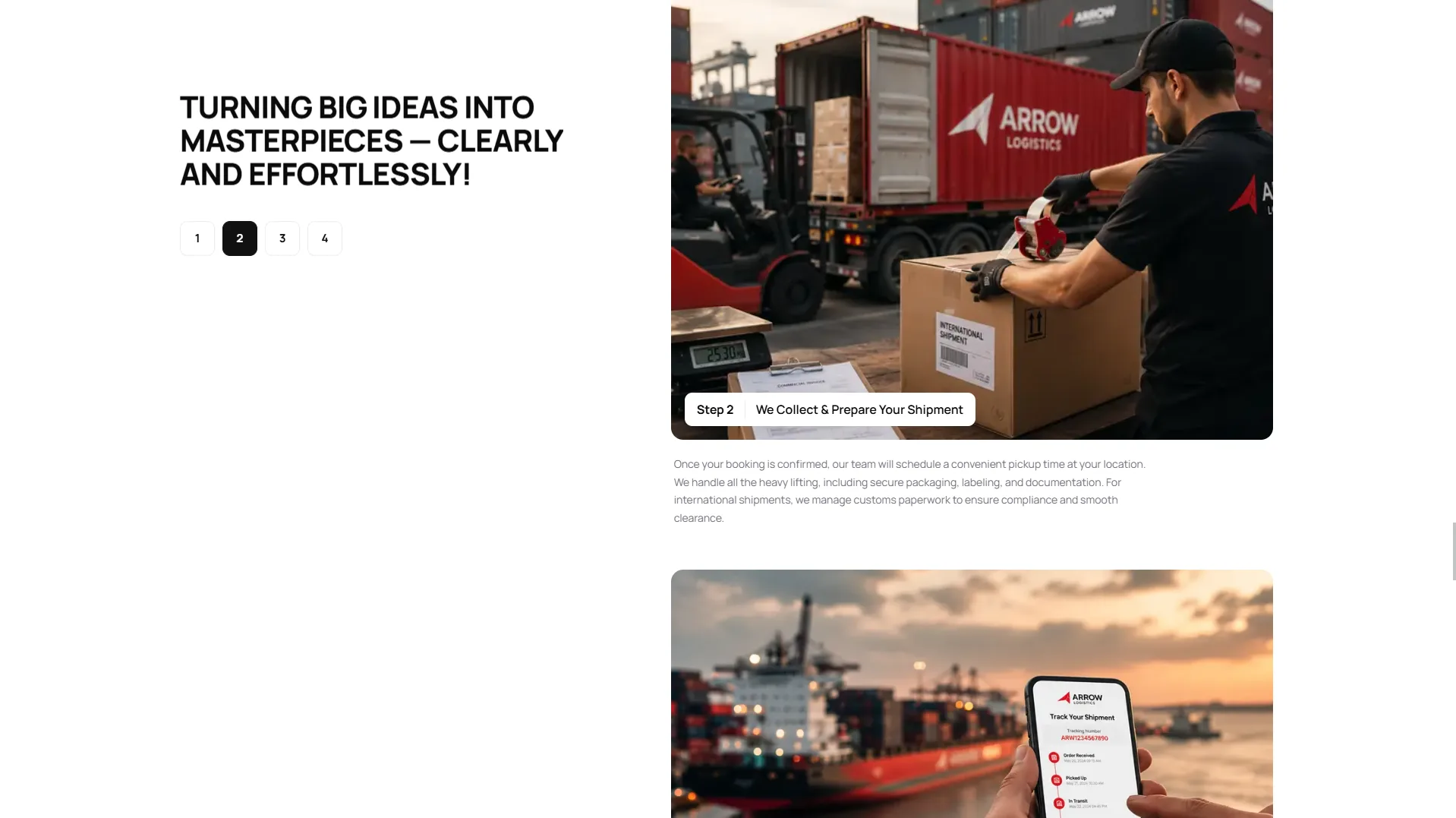
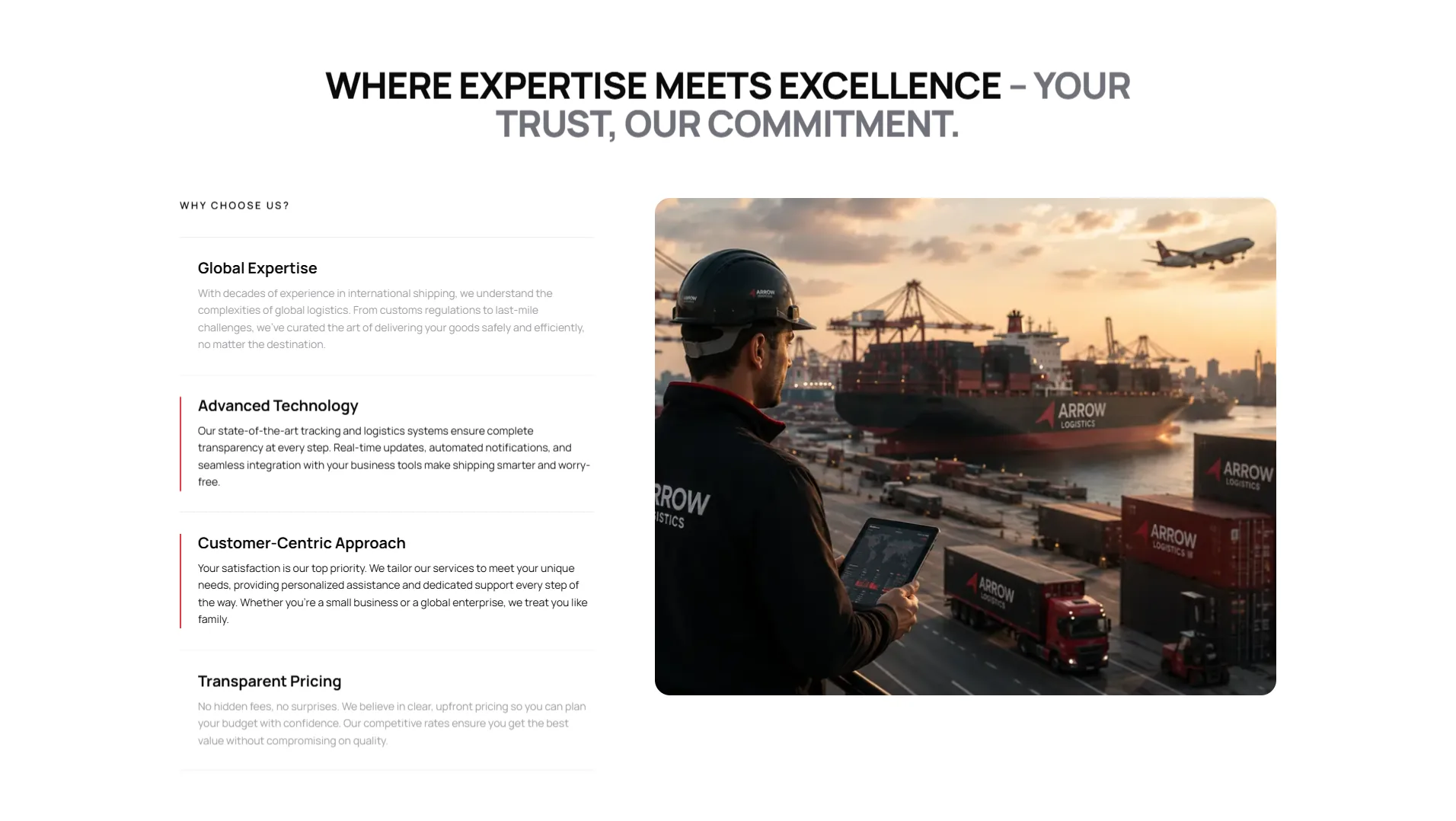
Four steps, from requesting a quote to delivery at the door, come with photos and a step switcher. The differentiators accordion fits end-to-end logistics, time-specific delivery, customs clearance and a dedicated manager into four compact items.
Questions and the form together
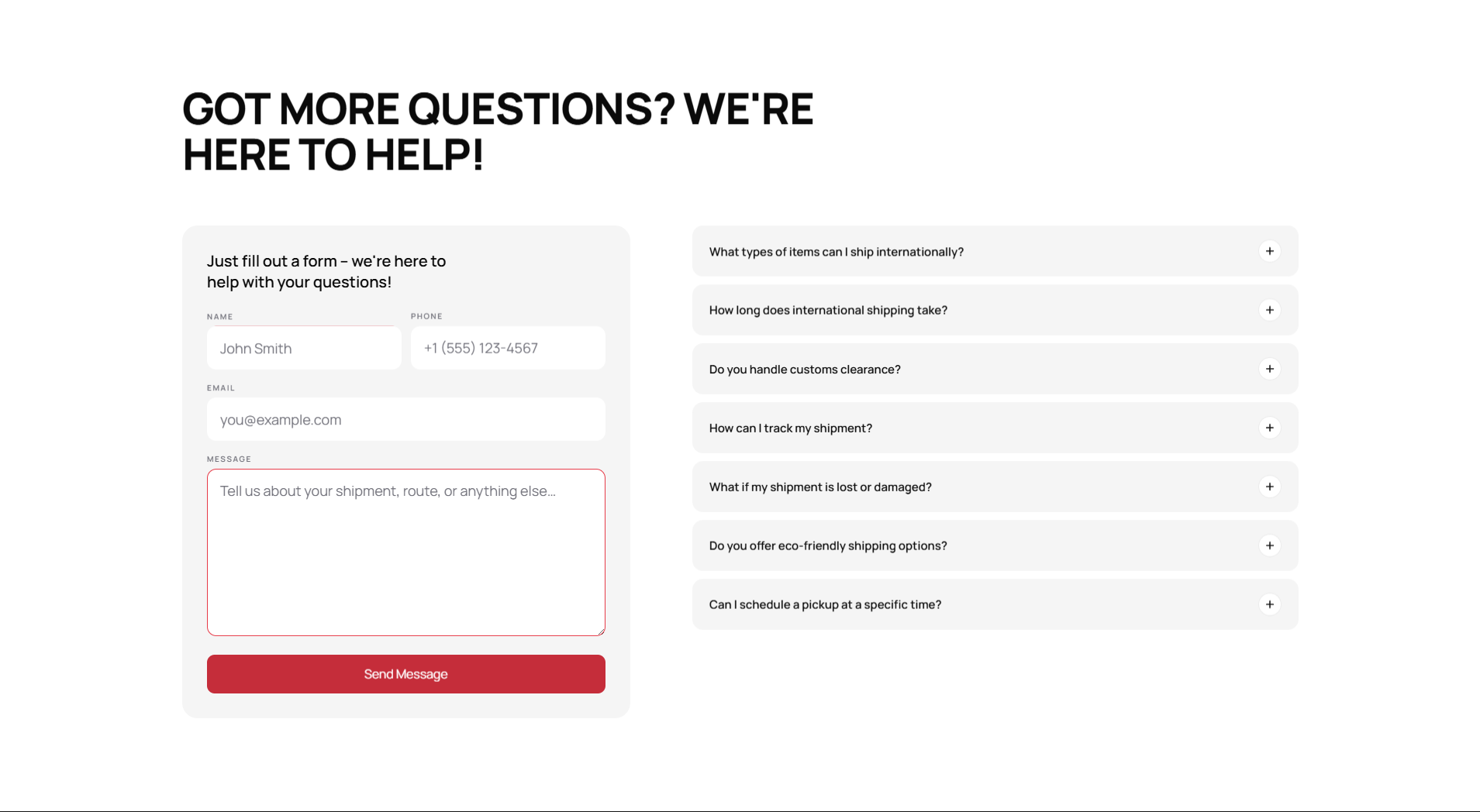
Seven frequently asked questions, about cargo types, transit times, customs, tracking, damage, greener options and pickup windows, sit beside a form with name, phone, email and message. The form asks for at least one contact and explains every error in plain words.
Requests land in Google Sheets
Tracking requests, quote requests and messages go to separate sheets of one spreadsheet, tagged with the site language. A hidden honeypot field and a limit on repeat submissions keep bots out, and if the network fails, the visitor sees a clear message rather than a silent error.
Results
The project's key outcomes in numbers.
- 3Language versions
Separate URLs for RU, UZ and EN help search engines show people the right version.
- 98/100Lighthouse score
Heavy animated scenes did not stop the page from scoring 98 out of 100 in Lighthouse.
- 5 daysBrief to launch
Going from the brief to a published landing page took five days.
- 3Request channels
Tracking, quote and contact requests each go to their own sheet in the team's spreadsheet.
Design & interfaces
Key screens and interfaces of the project.

Project tech stack
The stack we used to build the solution for the client's task.
- Vercel
- TypeScript
- React
- GSAP
- Vite
Ready to become the next case?
Tell us about your task — a manager will assemble the team, calculate the estimate and send a proposal within the first hour after the request. No obligations, no drip campaigns.