A redesign isn't "repainting the buttons"
A redesign is often understood as cosmetics: change colors, refresh fonts, add trendy animations. In reality a full redesign is rebuilding the site for new business goals: a new structure, new logic, new tasks. Done right, it can noticeably lift sales. Done in a rush, it can zero out the search positions you earned over years.
So a redesign should be approached as a strategic project, not a change of wallpaper. The main rule: we update the look and usability — but carefully preserve everything that already brings traffic and leads.
When a redesign is truly needed
Not every old site needs rebuilding. But there are honest signals it's time:
- the site loads slowly and fails Core Web Vitals;
- it looks bad and is awkward on a phone, while most traffic is mobile;
- the design is dated and undermines brand trust;
- the structure is confusing and visitors can't find things;
- the business changed — new services, audience, positioning — but the site stayed the same;
- the site can't be managed without a programmer.
If at least three points match — a redesign will almost certainly pay off.
The main risk: losing search traffic
The most common and painful mistake is to rebuild the site and find search traffic has collapsed. That happens when you:
- change page URLs without setting up redirects;
- delete or trim texts that brought traffic;
- break the structure and internal links search engines loved;
- lose meta tags and structured data;
- block the new site from indexing and forget to open it after launch.
A redesign with no SEO plan is like moving without boxes: you'll lose half your valuable things on the way.
How to keep positions during a redesign: a checklist
| Step | What to do |
|---|---|
| URLs | Keep addresses or set up 301 redirects |
| Content | Migrate and strengthen traffic-bringing pages |
| Meta tags | Preserve title, description, markup |
| Structure | Keep section logic and internal linking |
| Speed | Check Core Web Vitals before launch |
| Indexing | Make sure the site is open to crawlers |
| Analytics | Migrate counters and goals |
More on the key steps
Keep URLs or set up redirects. If page addresses change, be sure to set up 301 redirects from old addresses to new ones. That way the engine carries over the accumulated authority to the new pages.
Migrate valuable content. Identify the pages that bring traffic (via analytics) and don't delete their texts. They can and should be strengthened, not lost.
Don't lose meta tags and markup. Meta titles, descriptions and structured data move along with the pages.
How a proper redesign goes
- Audit of the current site — what works, which pages bring traffic, where the bottlenecks are.
- Requirements gathering — new goals, structure, design wishes.
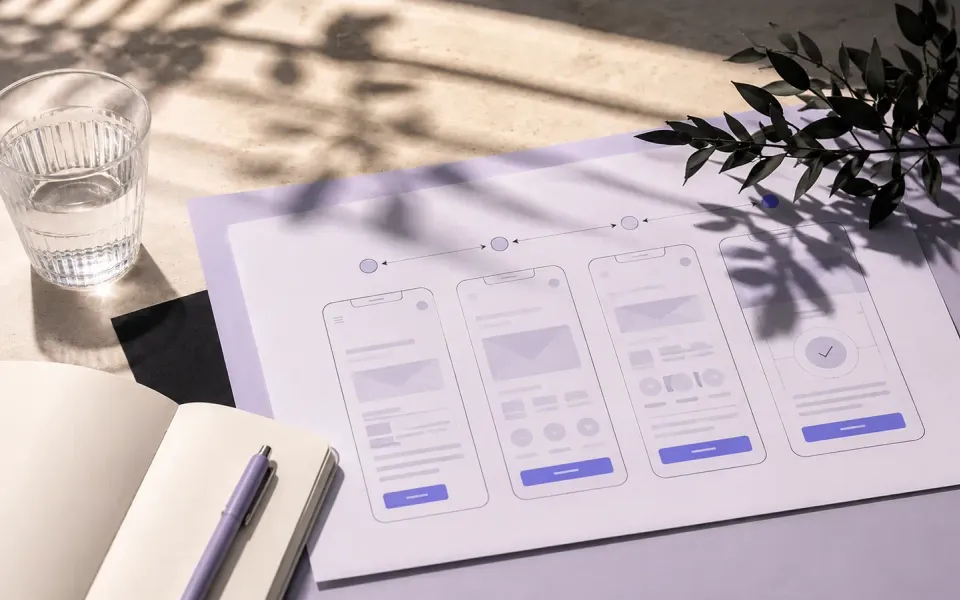
- Design planning — structure, prototypes, a redirect map.
- Design and development — a new interface on a fast foundation.
- Content and SEO migration — texts, meta tags, redirects.
- Testing — speed, the mobile version, links, forms.
- Launch and monitoring — tracking positions and quick fixes.
After launch: the first weeks are critical
Right after launch, watch the situation closely:
- check positions and traffic every day for the first weeks;
- review crawl error reports in Search Console;
- verify that all important pages are in the index;
- promptly fix broken links and non-working redirects.
A small temporary dip in traffic after a major redesign is normal. The key is to find and fix causes fast so it doesn't become permanent.
Frequently asked questions
Will traffic drop after a redesign?
With a proper approach that preserves URLs, content and redirects, there shouldn't be a strong drop. A small temporary dip is possible while the engine reindexes the site. Without an SEO plan, the drop can be sharp and lasting.
Can the design be updated without touching the structure?
Yes, and that's the safest option for SEO. If the structure and addresses stay the same and only the visuals and usability change, the risks are minimal.
How long does a redesign take?
It depends on the site's size and the depth of changes. A cosmetic refresh is faster, a full structural rebuild takes longer. Exact timing is set after an audit.
Conclusion
A redesign is a powerful growth tool, but only when done with respect for what already works. Update the design and usability, but carefully preserve URLs, content and SEO markup — and then the new site won't zero out but strengthen your positions and sales.
At Enzora we do redesigns with SEO preserved: we migrate URLs, content and markup, set up 301 redirects, check speed and monitor positions after launch. You get a modern, fast site — without a drop in traffic and sales. Tell us about your site — and we'll propose a risk-free update plan.